
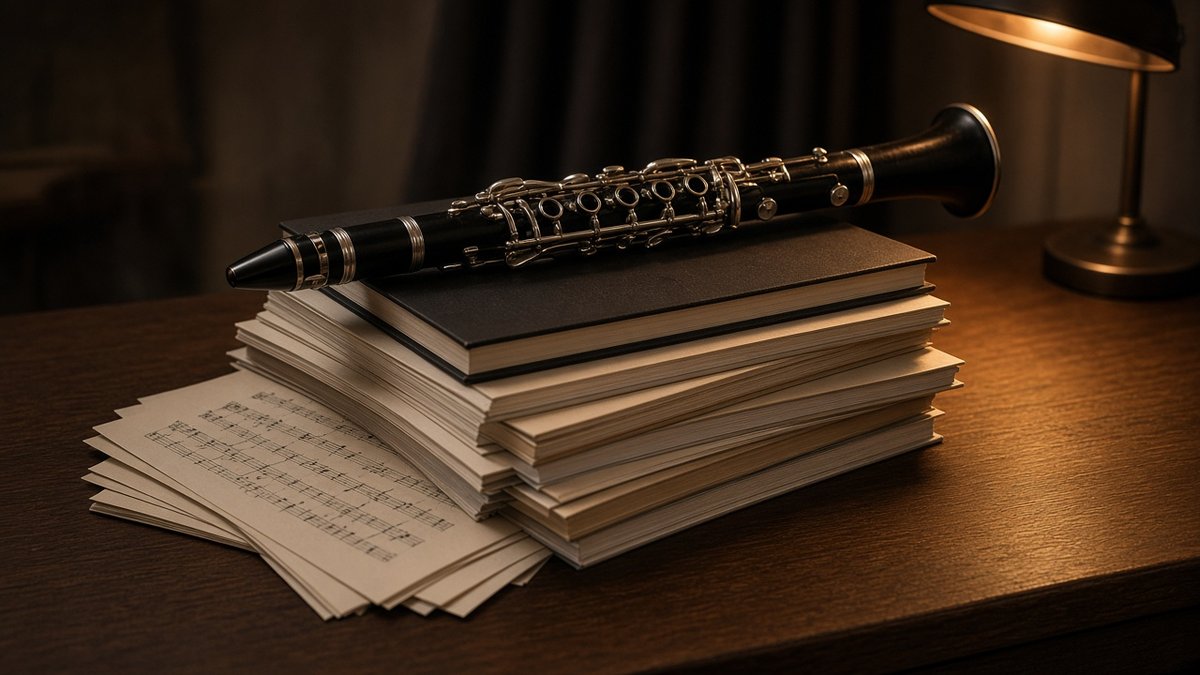
Clarinet method books are not all equal. Some are genuinely useful tools that teachers and students have relied on for generations. Others are thin on content, poor in progression, or simply not suited to how the clarinet actually works.
This guide covers the books that have a real track record, from the standard beginner methods to the etude collections used in conservatories. These are the books that consistently appear on university syllabi, private teacher reading lists, and audition preparation guides.
Best Clarinet Books by Level
| Book | Level | Best For | Price Range |
|---|---|---|---|
| Alfred’s Premier Clarinet Method | Beginner | Young students, first year | $8–12 |
| Rubank Elementary Method | Beginner | Traditional school band approach | $8–12 |
| Klose Celebrated Method | Intermediate | Serious students, comprehensive technique | $12–18 |
| Rose 32 Etudes | Advanced | Tone and musical expression | $10–15 |
| Baermann Complete Method | All levels | Comprehensive technique reference | $15–25 |
1. Alfred’s Premier Clarinet Method
Alfred’s Premier is the most widely used beginner clarinet method in the US right now. It’s laid out clearly with good pacing, covers the full range of notes in logical order, and includes online audio files so students can hear how each exercise should sound. The notation is large and easy to read for younger students.
Each page explains concepts briefly and moves on, which works well for students who are learning in a classroom or lesson setting. The accompanying audio tracks make it possible to practice with rhythm and pulse from very early on, which is more useful than many traditional methods that leave that to the teacher.
- Most widely used beginner method in US school programs
- Clear layout, logical progression through notes and techniques
- Online audio tracks for each exercise
- Large notation, easy to read for younger students
- Good pacing for the first year of lessons
2. Rubank Elementary Method
The Rubank Elementary Method has been in use since the 1930s. It’s more traditional than Alfred’s, with less explanation and more exercises, and it follows the classic band method approach that most American school music teachers trained on. Many private teachers still prefer it for exactly this reason: it’s thorough, sequential, and covers everything.
The layout is not as visually modern as Alfred’s and there are no audio recordings. What it offers instead is density: more exercises per page, more variety, and a progression that has been tested across generations of students. If your teacher recommends Rubank, that’s a vote of confidence in a method with a long track record.
- Used in American clarinet education since the 1930s
- Thorough and sequential, covers everything systematically
- Preferred by many experienced private teachers
- More exercises per page than modern methods
- No audio recordings, older visual layout
3. Klose Celebrated Method for the Clarinet
Hyacinthe Klose published his method in 1843 and it’s still in print, still used by serious students, still appearing on conservatory syllabi. That kind of longevity doesn’t happen by accident. The Klose method is comprehensive in a way that modern beginner methods aren’t: it covers scales in all keys, arpeggios, articulation patterns, and works through every technical challenge the instrument presents.
This is not a beginner book. It assumes you already have a basic sound and some familiarity with the instrument. But for a student who has been playing for a year and wants to develop serious technique, the Klose method is one of the most valuable books available. Teachers at the intermediate to advanced level very commonly assign sections of it.
- One of the most comprehensive clarinet methods ever written
- Covers scales, arpeggios, articulation, and technical exercises in all keys
- Still used in conservatories and by private teachers worldwide
- Not for beginners, assumes basic foundation is already in place
- Excellent value for the amount of material
4. Rose 32 Etudes for Clarinet
Cyrille Rose was a 19th century French clarinetist and teacher who wrote etudes that are still considered among the best for developing tone and musical expression. The 32 Etudes are musical studies as much as technical ones. Each has a character, a shape, a musical point. Playing them well requires real attention to sound quality, phrasing, and dynamic control.
Advanced students preparing for auditions or conservatory entrance exams will almost certainly encounter the Rose etudes. They’re a standard part of the serious clarinet repertoire, not just as exercises but as pieces with genuine musical value.
- Standard advanced etudes used in conservatories and audition prep
- Musical studies that develop tone and expression, not just technique
- Written by one of the great 19th century French clarinet teachers
- For advanced students, not intermediate level
- Excellent preparation for auditions and conservatory entrance
5. Baermann Complete Method for Clarinet
The Baermann method is the most comprehensive single volume in clarinet pedagogy. Three parts covering everything from first principles through advanced technique, originally published in the mid-1800s and still considered essential reference material. Many professional players keep a copy not because they practice from it daily, but because it contains exercises and scales they return to throughout their career.
For a serious student or teacher who wants one book that covers everything, the Baermann is the answer. It’s more of a reference library than a lesson-by-lesson curriculum, but the depth of material is unmatched.
- The most comprehensive single-volume clarinet method available
- Three parts covering beginner through advanced technique
- Used as reference material by professional players
- Better as a reference than a sequential curriculum
- Essential for serious students and teachers
What to Buy at Each Stage
First year: Alfred’s Premier or Rubank Elementary. Ask your teacher which they prefer. Either is a solid foundation. Don’t buy both.
Year two onwards: Your teacher will direct you toward specific material based on what you need to work on. Klose exercises for scale work and technical development are common. Supplementary pieces and solo repertoire are usually chosen lesson by lesson.
Advanced students: Rose 32 Etudes for musical development. Klose for technique. Baermann as a comprehensive reference. These three books cover most of what serious clarinet study requires.
A Note on Sheet Music
Solo repertoire for clarinet is vast. Weber, Brahms, Spohr, Mozart, Poulenc, the standard concertos and chamber music, are all widely available on Amazon in standard editions. If you’re looking for a specific piece, search by composer and title. The International Music Company and Carl Fischer editions are generally reliable for solo and chamber music. Urtext editions from Henle or Barenreiter are the standard for serious study of the major repertoire.
As an Amazon Associate, I earn from qualifying purchases.
Charlotte Moore

Charlotte Moore is a Clarinetist by profession and has over time offered lessons on how to play the clarinet among other musical instruments. And while a majority of clarinet players are well versed with the process of settling with a good clarinet among other accompanying features. There is little information about clarinets. The reason why Charlotte prepared comprehensive experts touching on the various facets of the clarinet. The consolidated information will offer more insight on everything clarinets including the best stand to use, and the best plastic clarinet that you can invest in, among other information. Charlotte Moore is a devoted mother of two and a professional clarinet player.