
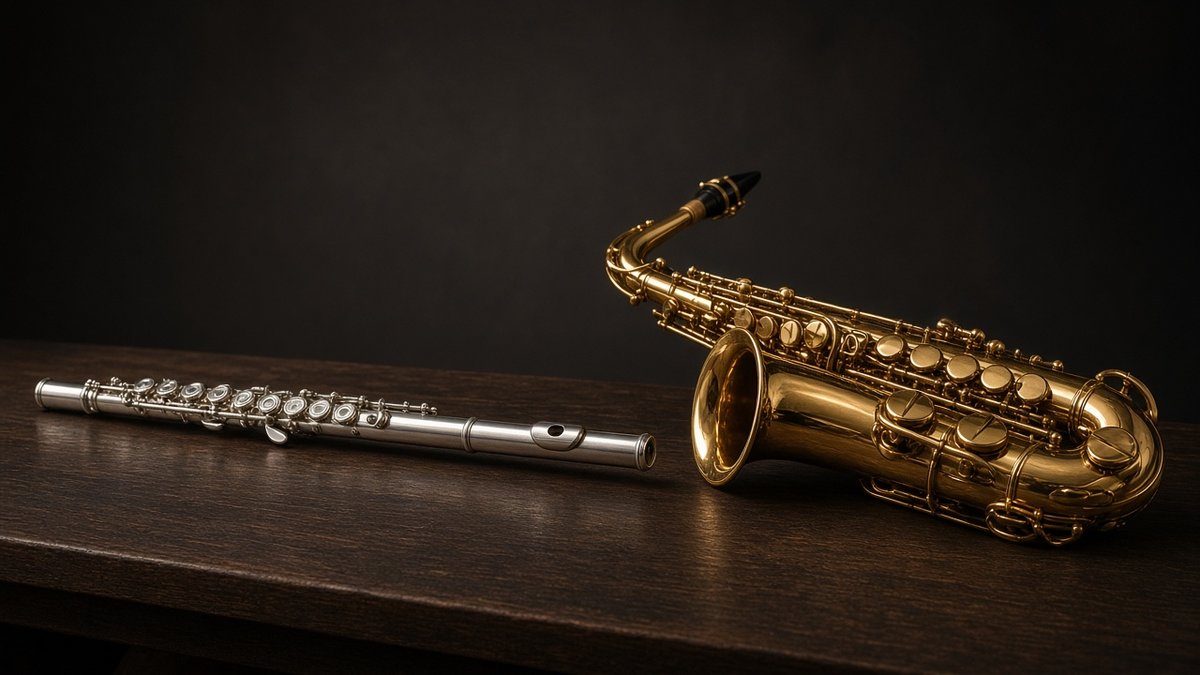
The saxophone vs flute decision is a common one for beginners choosing a woodwind instrument, and parents often face it when a child wants to join band. Although both are woodwinds, the saxophone vs flute comparison reveals two very different instruments in how they produce sound, how they feel to learn, and the roles they play in music. Understanding these differences makes choosing between them much clearer.
Saxophone vs Flute: Quick Comparison
| Saxophone | Flute | |
|---|---|---|
| Sound production | Single reed | Blowing across an open hole |
| Sound | Full, rich, powerful | Light, bright, airy |
| First sound difficulty | Easier reed response | Harder to produce at first |
| Weight | Heavier, hangs from neck | Light, held to the side |
| Orchestral use | Rare | Standard |
| Jazz and pop use | Dominant | Occasional |
| Beginner cost | $450–$1,100 | $230–$500 |
How They Produce Sound
The most fundamental difference is how each instrument makes sound. The saxophone uses a single reed that vibrates against the mouthpiece when you blow, similar to a clarinet. Most beginners can produce a sound on the saxophone within their first session because the reed does much of the work.
The flute produces sound by blowing across an open hole in the headjoint, much like blowing across the top of a bottle. This takes more practice to master, and many beginners spend their first sessions learning just to produce a steady tone. Once that skill clicks, though, progress comes quickly. The flute has no reed to buy or maintain, which is a practical advantage over the saxophone.
How They Sound Different
The saxophone has a full, rich, powerful voice that projects strongly and carries real emotional weight. It’s the lead voice in jazz, a strong presence in rock and pop, and an expressive solo instrument. The flute has a light, bright, airy tone that floats above an ensemble. It’s a cornerstone of the orchestra and concert band, prized for its agility and its delicate, soaring high register.
Physical Differences
The saxophone is significantly heavier and hangs from a neck strap while playing, which can cause fatigue during long sessions, especially for younger players. The flute is light, but it’s held out to the side, which requires arm strength and can feel awkward at first. The flute’s side-held position can also be challenging for very young children with shorter arms, though curved headjoints help with this.
Saxophone: Pros and Cons
- Easier to produce a first sound
- Full, powerful, expressive tone
- Dominant in jazz, rock, and pop
- Strong solo presence
- Heavier to hold
- Requires reeds, an ongoing cost
- More expensive to start
- Rare in orchestral music
Flute: Pros and Cons
- Light to hold
- No reeds to buy or maintain
- Standard in orchestra and concert band
- Less expensive to start
- Harder to produce a first sound
- Side-held position can feel awkward
- Less presence in jazz and pop
Which Should You Choose?
Choose the saxophone if you’re drawn to jazz, rock, or pop, if you want a powerful expressive voice, or if producing a satisfying sound quickly matters to you. Choose the flute if you want to play in an orchestra or concert band, if you prefer a lighter instrument with no reeds to manage, or if budget is a concern. Both are rewarding instruments, and the right choice comes down to the sound you love and the music you want to play.
Best Beginner Instruments
For the saxophone, the Jean Paul AS-400 offers the best value at around $450, while the Yamaha YAS-280 is the premium choice. Our guide to the best alto saxophone for beginners covers the options in detail.
View Jean Paul AS-400 on Amazon
For the flute, the Yamaha YFL-222 is the most recommended choice, with the Jean Paul FL-220 as the budget option. See our guide to the best flute for beginners.
FAQ
Is saxophone or flute easier to learn?
The saxophone is easier to produce a first sound on because the reed does much of the work. The flute is harder at first, since producing a tone by blowing across the headjoint takes practice, but progress comes quickly once that skill clicks. Both are equally rewarding with dedicated practice.
Which is better for a child, saxophone or flute?
It depends on the child. The flute is lighter and has no reeds to manage, but the side-held position can be awkward for very young children. The saxophone is heavier but easier to get a sound out of. Consider the child’s size, strength, and the music they’re drawn to.
Can I switch from flute to saxophone?
Yes, though the two have different sound production methods, so the embouchure differs. The fingering also differs, but both are woodwinds and many of the underlying musical skills transfer. Players do switch between them, and some learn both.
Charlotte Moore

Charlotte Moore is a Clarinetist by profession and has over time offered lessons on how to play the clarinet among other musical instruments. And while a majority of clarinet players are well versed with the process of settling with a good clarinet among other accompanying features. There is little information about clarinets. The reason why Charlotte prepared comprehensive experts touching on the various facets of the clarinet. The consolidated information will offer more insight on everything clarinets including the best stand to use, and the best plastic clarinet that you can invest in, among other information. Charlotte Moore is a devoted mother of two and a professional clarinet player.