
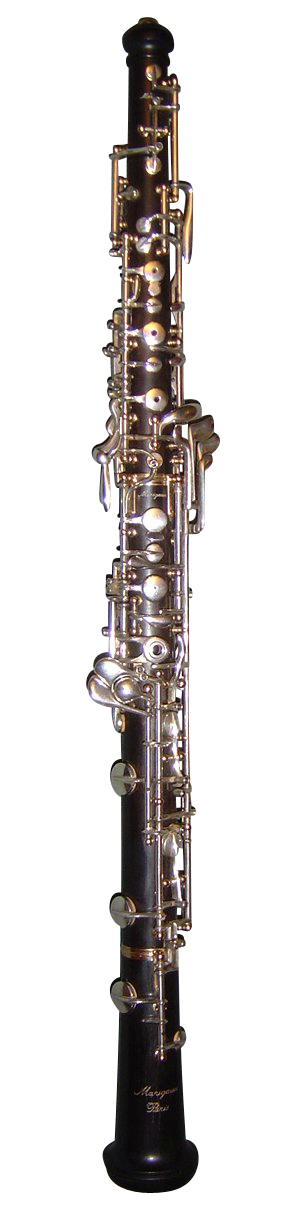
An intermediate oboe is the instrument that carries a player from school band into serious repertoire, and the jump matters more here than on almost any other woodwind. Student oboes use simplified keywork that quietly blocks passages the moment the music gets demanding. Step-up models add a modified conservatory system, a third octave key and a low B flat resonance key, which is exactly what advanced parts assume you have. Expect to spend $3,000 to $5,000, and here is where that money goes furthest.
Intermediate Oboe Comparison
| Model | Body | Best For | Approx Price |
|---|---|---|---|
| Yamaha YOB-441 | Grenadilla | Overall best choice | $3,900 |
| Yamaha YOB-441M Duet+ | Grenadilla with resin upper bore | Wood tone, fewer crack worries | $3,850 |
| Yamaha YOB-441AT | ABS resin | Marching, travel, humid climates | $3,400 |
| Fox Renard 330 | Resin | Durability with a warm sound | $3,700 |
| Fox Renard 335 | Grenadilla with rubber inserts | Players heading toward professional study | $4,500 |
Yamaha YOB-441: The Standard Step-Up
The 441 is the intermediate oboe teachers name first. The grenadilla body brings a depth and focus the student model cannot match, and the modified conservatory keywork covers the great majority of orchestral and solo repertoire a student will meet before conservatory.
- Modified conservatory system with third octave and low B flat resonance keys
- Even intonation that makes ensemble work easier
- Excellent resale demand
- Wooden body needs humidity care and a break-in period
- Significant price jump from the YOB-241
Yamaha YOB-441M Duet+: Wood Sound, Fewer Worries
The Duet+ construction pairs a grenadilla body with an injection moulded inner bore in the upper joint. You keep most of the tonal character of wood while removing the risk that a cracked top joint ruins your season.
- Stable bore that resists humidity swings
- Wood body retains warmth and colour
- Same keywork as the standard 441
- Purists prefer an all-wood bore
- Priced the same as the full grenadilla model
Yamaha YOB-441AT: The Durable Option
An all-resin body with the upgraded intermediate keywork. If the instrument travels, lives in a school building or faces a humid climate, this is the practical answer and it never needs a break-in schedule.
- Will not crack, whatever the weather
- Cheapest way into intermediate keywork
- Very low maintenance demands
- Tone is slightly less complex than grenadilla
- Less prestige in audition settings
Fox Renard 330 and 335: The American Alternative
Fox builds in Indiana and its instruments have a warmer, more forgiving response than the Yamaha line. The 330 is fully resin with a modified conservatory system, while the 335 uses grenadilla with hard rubber inserts in the top joint and adds a low B flat vent.
- Warm tone that blends easily in a section
- Less sensitive to reed variation than French bores
- Strong service support in North America
- Fewer European dealers
- The 335 pushes into professional pricing
How to Know You Are Ready
The clearest signal is repertoire. If your parts call for fingerings your student oboe does not have, or if you are constantly fighting the third octave, the instrument has become the limit. Another sign is reed sensitivity: advanced players making their own reeds need an instrument that responds to small adjustments, and student oboes flatten those differences out.
Before you buy, arrange a trial with your own reeds and give the instrument a full practice session rather than a five minute test. Budget for a case humidifier if you choose a wooden body, and plan on annual servicing at around $150. Our guides to the best oboe reeds and to how much an oboe costs cover the running expenses in detail, and the best oboes for beginners guide covers the tier below.
Frequently Asked Questions
What is the difference between a student and intermediate oboe?
Keywork mainly. An intermediate oboe adds a modified conservatory system, a third octave key and a low B flat resonance key, plus better materials and tighter tolerances.
Should I choose wood or resin?
Resin for durability and travel, wood for tonal depth. The Duet+ hybrid design is a reasonable compromise if you want both.
How long will an intermediate oboe last?
With annual servicing, ten years or more of heavy playing. Many students take one right through university before considering a professional instrument.
Charlotte Moore

Charlotte Moore is a Clarinetist by profession and has over time offered lessons on how to play the clarinet among other musical instruments. And while a majority of clarinet players are well versed with the process of settling with a good clarinet among other accompanying features. There is little information about clarinets. The reason why Charlotte prepared comprehensive experts touching on the various facets of the clarinet. The consolidated information will offer more insight on everything clarinets including the best stand to use, and the best plastic clarinet that you can invest in, among other information. Charlotte Moore is a devoted mother of two and a professional clarinet player.