
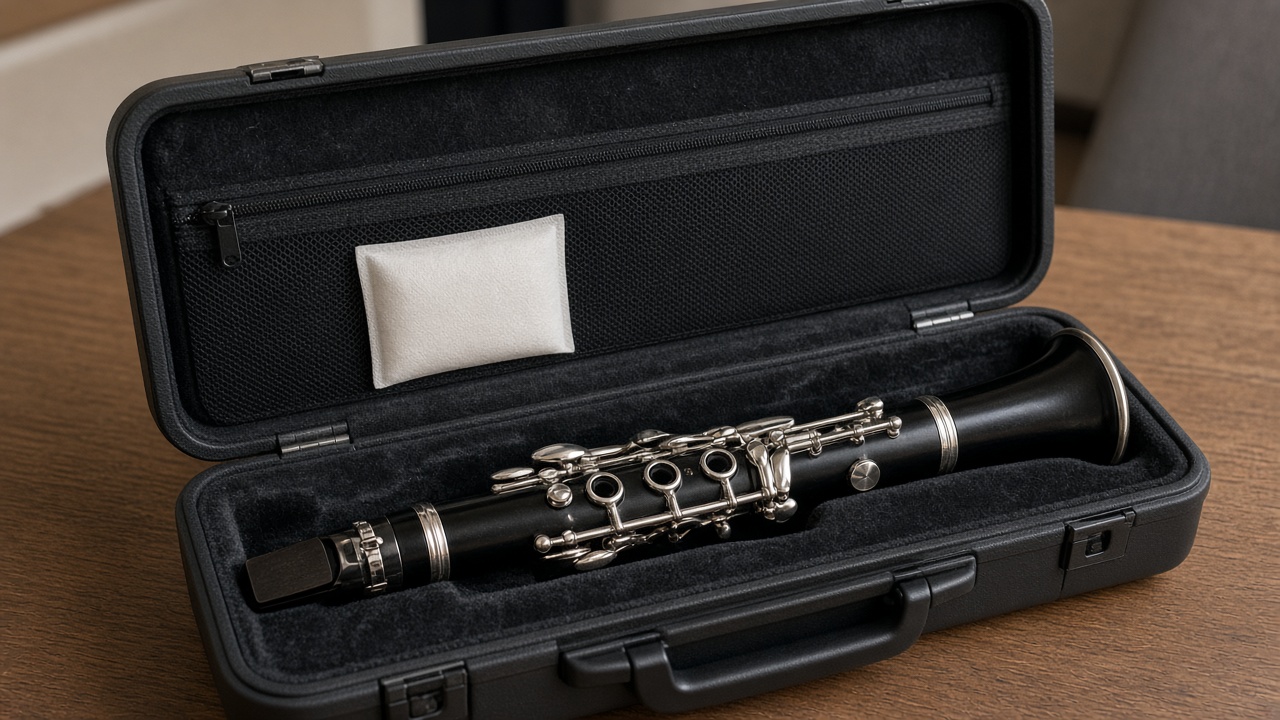
A wooden clarinet needs stable humidity more than it needs another polish cloth. Dry winter heating and wide swings between home, school, and the car are what crack grenadilla and unseat pads. A humidifier will not fix a horn that already needs a technician, but the right one in the case (and, if you use it carefully, in the bore) is the simplest way to keep a wooden instrument in playing condition.
Resin student horns such as the Yamaha YCL-255 do not crack the way grenadilla does. They still need a swab after playing. Reeds also last longer when they are not stored bone dry or soaking wet. This guide is for players who own, or are about to own, a wooden clarinet and want a case humidity setup that is actually sold for that job.
Clarinet Humidifiers Compared
| Product | How it works | Best For | Official notes |
|---|---|---|---|
| Boveda 49% Size 8 | Two-way pack in a fabric holder inside the case | Low-maintenance case humidity | Official range 40% to 60% RH; replace about every 3 months |
| Dampit clarinet joints | Reusable tube moistened and placed in the instrument | Players who already own the original Dampit system | Official optimum 45% to 55%; use in dry weather only |
Boveda 49% Size 8: The Low-Maintenance Case Pack
Boveda’s official wooden-instrument guidance is to keep wood in a stable 40% to 60% relative humidity range. The company’s 49% RH packs are designed to add or remove moisture automatically so the case stays in that band. Official clarinet instructions are simple: place Boveda in the fabric holder inside the case. For a tight-fitting clarinet or oboe case, Boveda points buyers to the Size 8 pack rather than the larger guitar packets.
On Boveda’s official store, the B49 Size 8 refill pack for bows and small woodwinds was listed at $14.99 in November 2026. Official materials say to replace the packs about every three months. That is the appeal: no dripping tube, no guessing whether you over-soaked it, and a stated humidity range you can check with a small case hygrometer. It will not humidify a room, and it will not help much if the case is left open on a radiator.
Pros
- Official 40% to 60% RH target for wooden instruments, with 49% packs that work both ways
- Made for a clarinet case when you use the Size 8 pack in the fabric holder
- Replace about every three months, with very little day-to-day fuss
Cons
- Ongoing cost, because the packs are consumable
- Does nothing if the case is left open in dry air
- Will not rescue a clarinet that already has open cracks
Dampit: The Original In-Instrument Tube
Dampit is official about clarinet use: the company lists Dampits for clarinet first joint and clarinet second joint, alongside its better known string-instrument sizes. Official instructions say to immerse the Dampit in water for about 20 seconds, pinch out the excess, wipe the outer tube dry, and place it inside the instrument. The official optimum humidity range is 45% to 55%. Dampit also says the humidifier may remain inside the instrument while it is played, and that you should use it only during dry weather or central heating periods, not as an all-year soak.
Used correctly, this is a long-lived, reusable option. Used carelessly, a dripping tube can wet pads and bore. Follow the official drying step and keep a humidity indicator in the room or case so you are not guessing. This is a supplement to case humidity, not a reason to skip swabbing. See How to Clean a Clarinet After Practice and Wood Clarinet Care and Preservation for the daily routine around this.
Pros
- Official clarinet first-joint and second-joint sizes, from the original Dampit maker
- Reusable for years if you follow the official wetting and drying steps
- Stated optimum of 45% to 55%, which sits inside the usual wooden-instrument range
Cons
- Easy to over-wet if you skip the official pinch-and-wipe step
- Not a set-and-forget case system
- Does not replace a closed case and a stable storage spot
How to Set Up Humidity Control
Start with the case, not with a gadget. Store the clarinet in its closed case, away from radiators, heating vents, and a hot car. Swab the bore after every playing session so you are not trapping liquid water and then chasing dryness with a humidifier. A small hygrometer in the case tells you whether the setup is actually working.
For most wooden-clarinet owners, a two-way case pack such as Boveda Size 8 is the simplest daily system. Add a Dampit only if you understand the official wetting instructions and you are in a genuinely dry season. Do not use either product as a repair for a crack you can already see. Take that instrument to a technician.
If you are still choosing a wooden clarinet, our guides to the best intermediate clarinets and plastic versus wood explain when that upgrade is worth the extra care.
Frequently Asked Questions
What humidity should a wooden clarinet live in?
Boveda’s official wooden-instrument range is 40% to 60% relative humidity. Dampit’s official optimum is 45% to 55%. The shared idea is a stable mid range, not a soaked case and not bone-dry winter air.
Do I need a humidifier for a resin clarinet?
Not for crack prevention. ABS bodies do not crack the way grenadilla does. You should still swab after playing, and reeds still prefer stable storage. Save the case-humidity setup for a wooden instrument.
Can I just put a wet sponge in the case?
That is a poor substitute. A loose wet sponge can soak pads, rust screws, and swing the case from too dry to too wet. Use a product designed for instrument cases, and measure the result with a hygrometer.
Charlotte Moore

Charlotte Moore is a Clarinetist by profession and has over time offered lessons on how to play the clarinet among other musical instruments. And while a majority of clarinet players are well versed with the process of settling with a good clarinet among other accompanying features. There is little information about clarinets. The reason why Charlotte prepared comprehensive experts touching on the various facets of the clarinet. The consolidated information will offer more insight on everything clarinets including the best stand to use, and the best plastic clarinet that you can invest in, among other information. Charlotte Moore is a devoted mother of two and a professional clarinet player.