
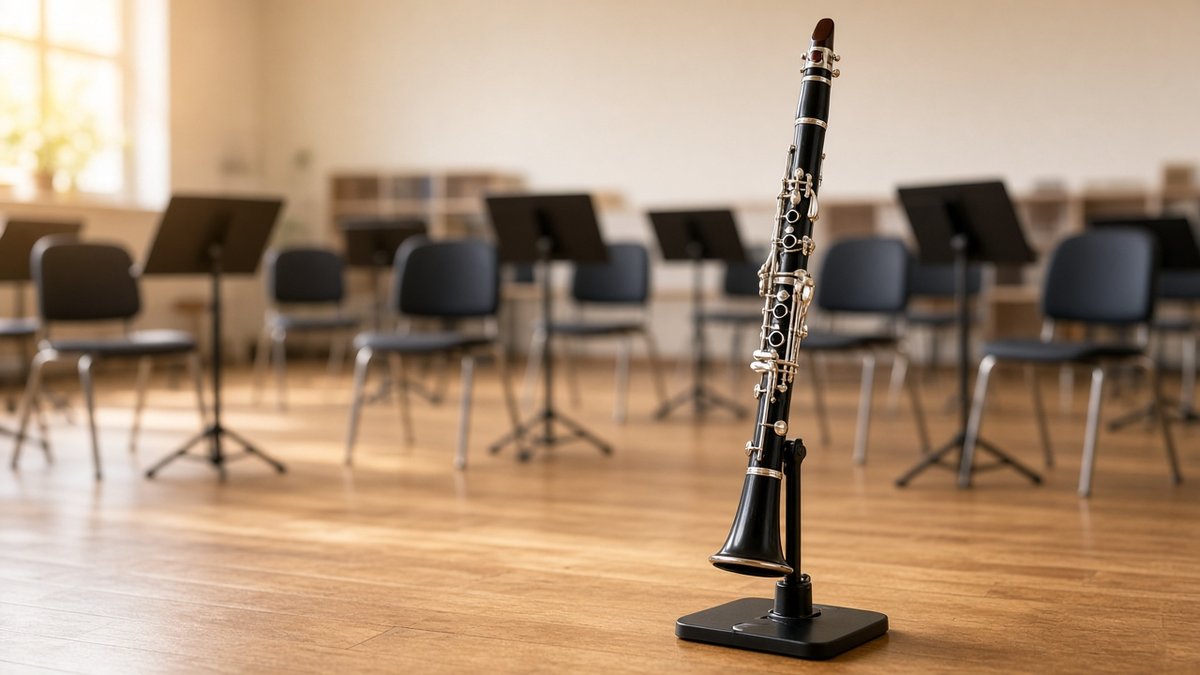
The Buffet B12 review is a question that comes up constantly among parents and students looking for a named-brand student clarinet. The Buffet B12 clarinet review is worth doing honestly, because while the Buffet name carries significant weight, the B12 sits at the budget end of that brand’s lineup. Understanding exactly what you’re buying helps set appropriate expectations before spending the money.
Buffet B12 Review: What Is This Instrument?
The Buffet B12 is Buffet Crampon’s entry-level student clarinet, designed specifically for beginners. Although it carries the Buffet name, one of the most respected in professional clarinet manufacturing, the B12 is made from ABS resin rather than wood. Its design priorities are durability and affordability rather than tonal complexity.
It’s typically found in school rental programs and music store beginner packages. Many parents assume the B12 shares characteristics with the brand’s professional instruments because of Buffet’s strong reputation. In practice, however, the B12 competes directly with the Yamaha YCL-255 and Jean Paul CL-300 as a student instrument, rather than offering any of the qualities that define Buffet’s professional line.
Build and Construction
The B12 uses a high-quality ABS resin body that is durable and stable across temperature and humidity changes. Because ABS doesn’t expand or contract the way wood does, it handles school environments reliably. The nickel-plated keys are well-finished for a student instrument, and the Boehm 17-key system is the same layout as all standard Bb clarinets.
The bore design is the area where Buffet’s expertise shows most clearly. Although the B12 is a budget instrument, its bore geometry produces better intonation in the throat tone register than many comparable instruments. The pads are also well-seated from the factory, which means the instrument usually arrives in playing condition without needing adjustment.
Sound
The B12 produces a clean, clear tone that is bright without being shrill. It stays in tune reliably across the full range, which is the most important quality for a beginner developing pitch awareness. Compared to instruments at similar price points from less established brands, the B12’s consistency is noticeably better. Individual instruments vary less, and the tone holds up throughout the range rather than becoming uneven in the upper register.
The ABS body does limit tonal warmth. Players moving from the B12 to a wood instrument notice a clear difference. For a beginner, though, warmth is not the priority. Accurate intonation and consistent response are, and the B12 delivers both.
Buffet B12 Review: Pros and Cons
- Buffet’s bore design produces better intonation than generic student instruments
- Durable ABS body handles school use reliably
- Consistent between instruments with less quality lottery than budget brands
- Good key action for a student instrument
- Strong brand resale value
- ABS body lacks the warmth of ebonite alternatives at a similar price
- Carries a price premium for the Buffet name that may not be justified at student level
- Included mouthpiece is basic
View Buffet B12 Price on Amazon
Buffet B12 vs Yamaha YCL-255
| Buffet B12 | Yamaha YCL-255 | |
|---|---|---|
| Body | ABS Resin | ABS Resin |
| Bore | Buffet student spec | Yamaha student spec |
| Intonation | Very good | Excellent |
| Key action | Good | Very good |
| Teacher familiarity | High | Very high |
| Price | ~$300–380 | ~$380 |
The two instruments are closely matched. The Yamaha has slightly smoother key action from the factory. The Buffet B12’s bore design produces intonation that many teachers specifically praise. Since prices are similar, the choice often comes down to which brand a student’s teacher is more familiar with. In most American school programs, that means Yamaha.
Buffet B12 vs Jean Paul CL-300
The Jean Paul CL-300 offers a genuine contrast. Although the Jean Paul lacks the Buffet brand recognition, its ebonite body produces a warmer tone than the B12’s ABS at a lower price. For families where budget matters, the CL-300 delivers more tonal quality per dollar than the B12.
If a student’s teacher or school program specifically recommends Buffet instruments, the B12’s consistency and the brand’s support network have practical value that the Jean Paul can’t fully match.
Is the Buffet B12 Worth Buying?
Yes, with the understanding of what it is. The Buffet B12 is a well-made, reliable student clarinet that benefits from Buffet’s bore design expertise and quality control. It’s a sound choice for beginners in school programs, particularly where the Buffet name has weight with teachers or where the instrument might enter a rental-to-own program.
If brand recognition isn’t a factor in your decision, though, the Yamaha YCL-255 offers comparable quality with better key action, and the Jean Paul CL-300 offers warmer tone at a lower price. The Buffet name adds value at the professional level. At the student level, it’s worth less than it costs.
For a broader comparison of student instruments at this price range, see our full guide to the best student clarinets.
FAQ
Is the Buffet B12 a professional clarinet?
No. The B12 is a student instrument. Although it carries the Buffet name, it shares no design features with Buffet’s professional instruments like the R13 or E11. Professional Buffet quality begins with the E11 intermediate model.
How long will the Buffet B12 last?
With proper care and annual servicing, the B12 will last through the student years and beyond. The ABS body is essentially indestructible with normal use, and pads and corks can be replaced as needed. Most students will want to upgrade before the instrument wears out.
What mouthpiece should I use with the Buffet B12?
The included mouthpiece is functional for beginners, but most teachers recommend upgrading to a Yamaha 4C after a few months. It costs around $30 and makes a noticeable improvement in tone and ease of playing on any student instrument.
Charlotte Moore

Charlotte Moore is a Clarinetist by profession and has over time offered lessons on how to play the clarinet among other musical instruments. And while a majority of clarinet players are well versed with the process of settling with a good clarinet among other accompanying features. There is little information about clarinets. The reason why Charlotte prepared comprehensive experts touching on the various facets of the clarinet. The consolidated information will offer more insight on everything clarinets including the best stand to use, and the best plastic clarinet that you can invest in, among other information. Charlotte Moore is a devoted mother of two and a professional clarinet player.