
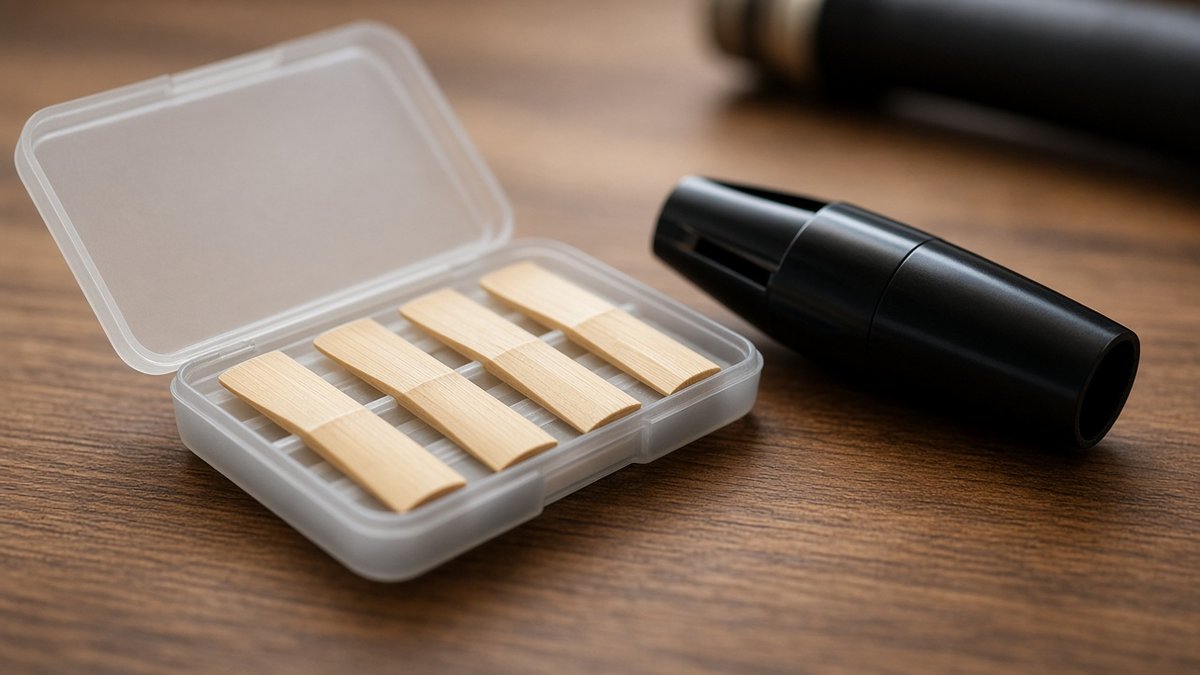
A clarinet reed case is one of the most overlooked accessories a player can own, yet it has a direct effect on how long your reeds last and how consistently they play. The best clarinet reed case keeps reeds flat, dry, and protected between sessions, which prevents the warping and cracking that reduces a good reed to a useless one before its time. This guide covers the best options at every price point.
Why Reed Storage Actually Matters
Most beginners store reeds back in the plastic sleeve they came in, which is the worst possible option. The plastic sleeve doesn’t hold the reed flat as it dries, which leads to warping. A warped reed doesn’t seal evenly against the mouthpiece, which produces airy, inconsistent tone and makes the instrument feel unresponsive in a way that can be mistaken for poor technique.
A proper reed case holds each reed flat on a grooved or glass surface as it dries. Because the reed dries evenly rather than curling, it plays more consistently the next time it’s used. Players who switch from storing reeds in plastic sleeves to using a proper case almost always notice their reeds lasting longer and playing more reliably within a few weeks.
Best Clarinet Reed Case: Quick Comparison
| Reed Case | Price | Capacity | Best For |
|---|---|---|---|
| Vandoren Hygro Case HRC10 | ~$30–40 | 6 reeds | Players who want humidity control |
| D’Addario Vitalizer Case RVCASE04 | ~$20–25 | 8 reeds | Best value with humidity pack |
| D’Addario Reed Guard IV | ~$6–8 | 4 reeds | Budget option, fits in any case |
| Protec A250 Reed Case | ~$12–15 | 12 reeds | Players who carry lots of reeds |
Vandoren Hygro Case HRC10: Best for Humidity Control
The Vandoren Hygro Case is the most sophisticated reed case on the market. It uses a humidity indicator disc that shows whether the interior humidity is within the optimal range for reed storage. An internal circulation system maintains stable humidity around the reeds, preventing both over-drying and the swelling that happens when reeds absorb too much moisture.
Because reeds are extremely sensitive to humidity changes, players who live in dry climates or who travel frequently find the Hygro Case makes a significant difference to reed consistency. The case holds six reeds of any standard Bb or Eb clarinet size, and the numbered compartments make reed rotation easy to track.
- Built-in humidity indicator disc
- Regulated humidification by air circulation
- Numbered compartments for easy rotation
- Made by Vandoren the reed brand most players trust
- More expensive than alternatives
- Holds only 6 reeds
View Vandoren Hygro Case on Amazon
D’Addario RVCASE04 Vitalizer Case: Best Value
The D’Addario Vitalizer Case holds eight reeds of any clarinet or saxophone size and includes a Reed Vitalizer Humidity Control pack set to 72% relative humidity. The grooved surface holds each reed flat as it dries, and the airtight gasket keeps the internal environment stable between uses. Because the humidity pack automatically adds or reduces humidity depending on conditions inside the case, reeds stay in optimal condition with minimal effort.
At around $20 to $25, it’s the most complete value in reed storage. The included humidity pack lasts two to three months before needing replacement, and replacement packs are inexpensive and widely available.
- Humidity pack included ready to use immediately
- Holds 8 reeds of any size
- Airtight gasket maintains stable environment
- Best value combination of price and performance
- Humidity packs need periodic replacement
- Bulkier than the Reed Guard option
View D’Addario Vitalizer Case on Amazon
D’Addario Reed Guard IV: Best Budget Option
The Reed Guard is the simplest, most affordable reed case on the market. It holds four reeds on a flat surface with secure clips, prevents warping, and costs around $6 to $8. It’s slim enough to slip into any instrument case pocket and light enough that there’s no reason not to carry one.
For students who want a basic step up from the plastic sleeve without spending on humidity control features, the Reed Guard is a straightforward and effective choice. Most teachers recommend it as the minimum standard for reed storage at all levels.
- Very affordable under $8
- Holds reeds flat to prevent warping
- Slim enough to fit in any case pocket
- Available in multiple colours
- No humidity control
- Only holds 4 reeds
- Less durable than enclosed cases
View D’Addario Reed Guard on Amazon
Protec A250: Best for High-Volume Reed Users
The Protec A250 holds 12 reeds, making it the right choice for players who carry a large number of reeds, teachers who assess multiple students’ reeds, or anyone who likes to have a full selection available at rehearsals. The case is compact despite its capacity, and each reed rests on a grooved surface that prevents warping. It’s priced between the Reed Guard and the Vitalizer Case, without humidity control but with solid construction and generous capacity.
How to Get the Most From Your Reed Case
A reed case works best when combined with a few consistent habits. After playing, remove the reed from the mouthpiece and gently dry the surface with a soft cloth before placing it in the case. Allow it to dry in the case rather than sealing a wet reed in an airtight case, which can encourage mold growth. Rotate between three or four reeds, using a different one each session, and each reed will last significantly longer than if the same one is used every day.
If you use a humidity pack in your case, check it monthly. A humidity pack that has hardened and lost flexibility is no longer providing humidity control and needs replacing. Most packs last two to three months with regular use.
For more on choosing and caring for your reeds, see our full guide to the best clarinet reeds.
FAQ
Does a reed case really make a difference?
Yes. Reeds stored flat in a proper case warp significantly less than reeds stored in plastic sleeves. Because warping is one of the main reasons reeds stop playing well before their cane is worn out, using a proper case directly extends how long each reed stays usable and how consistently it plays.
What humidity level is best for clarinet reeds?
Around 70 to 75% relative humidity is generally considered optimal for cane reeds. Too dry and the cane becomes brittle and prone to cracking. Too humid and the reed absorbs excess moisture and loses its responsiveness. Cases with humidity control packs, like the D’Addario Vitalizer or Vandoren Hygro Case, maintain this range automatically.
Can I use the same reed case for different reed sizes?
The D’Addario Vitalizer Case RVCASE04 accepts reeds from Eb clarinet through baritone saxophone, so it works across multiple clarinet sizes and instruments. The Vandoren HRC10 Hygro Case works for Bb and Eb clarinet and soprano/alto saxophone reeds. Check the capacity and compatibility of any case before buying if you play more than one instrument.
Charlotte Moore

Charlotte Moore is a Clarinetist by profession and has over time offered lessons on how to play the clarinet among other musical instruments. And while a majority of clarinet players are well versed with the process of settling with a good clarinet among other accompanying features. There is little information about clarinets. The reason why Charlotte prepared comprehensive experts touching on the various facets of the clarinet. The consolidated information will offer more insight on everything clarinets including the best stand to use, and the best plastic clarinet that you can invest in, among other information. Charlotte Moore is a devoted mother of two and a professional clarinet player.