
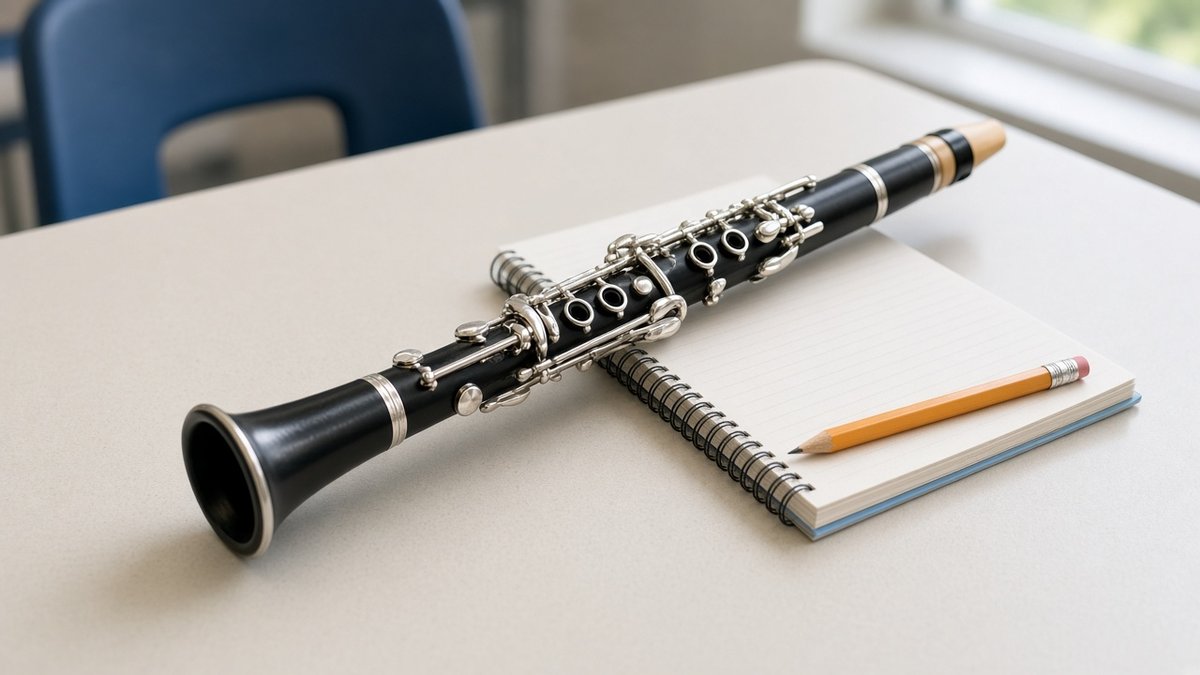
Finding the best clarinet for kids requires thinking about the instrument differently than buying for an adult or older student. The best clarinet for kids needs to be physically manageable for smaller hands, durable enough to survive being carried to and from school daily, and good enough to not frustrate a young player who is still figuring out whether they love the instrument. Price matters too, because not every child who starts clarinet at age 9 or 10 will still be playing at 14.
What Age Can Kids Start Clarinet?
Most clarinet teachers recommend starting no earlier than age 9 or 10. The reason is physical: the clarinet requires the fingers to reach all the keys, and the embouchure development needed to produce a consistent sound requires a degree of jaw and facial muscle control that younger children don’t fully have. Starting too early leads to frustration for both the child and the parent.
Children who start between 10 and 12 progress most naturally. At that age, most have hands large enough to reach the keys comfortably, and they can understand and follow a teacher’s instructions in a way that accelerates early progress.
Best Clarinet for Kids: Quick Comparison
| Clarinet | Price | Body | Best For |
|---|---|---|---|
| Yamaha YCL-255 | ~$380 | ABS Resin | Committed students, school band |
| Jean Paul CL-300 | ~$230 | Ebonite | Kids just starting out |
| Jupiter JCL700N | ~$400 | ABS Resin | School programs, durability |
Yamaha YCL-255: Best Clarinet for Most Kids
The Yamaha YCL-255 is the most commonly recommended clarinet for children in school band programs, and that recommendation comes from years of reliable performance in exactly this context. The ABS resin body is virtually indestructible under normal student use. The keys are smooth and well-adjusted, which means a young player isn’t fighting mechanical resistance on top of the natural challenges of learning the instrument. The adjustable thumb rest is particularly important for kids because it lets the teacher position the rest for the child’s hand size as they grow.
Because Yamaha’s quality control is excellent, parents buying the YCL-255 online can be confident the instrument will arrive in proper playing condition without needing adjustment. That’s not always true of budget alternatives, where a poorly set-up instrument can make a child think they’re doing something wrong when the problem is the clarinet itself.
- The most teacher-recommended clarinet for school band
- Durable enough for years of student use
- Adjustable thumb rest adapts as child grows
- Consistent quality safe to buy without playing first
- Strong resale value
- More expensive than budget alternatives
- Stock mouthpiece needs upgrading after a few months
View Yamaha YCL-255 Price on Amazon
Jean Paul CL-300: Best Budget Clarinet for Kids
If the Yamaha’s price is a stretch, the Jean Paul CL-300 is the best alternative for young beginners. Its ebonite body produces a warmer tone than the Yamaha’s ABS, and each instrument is play-tested before shipping, which reduces the quality variance that makes some budget clarinets frustrating for young players. At around $230, it costs $150 less than the Yamaha, which is significant for families who aren’t sure yet how long their child will stay with the instrument.
The CL-300 comes with everything a child needs to start immediately: mouthpiece, ligature, reeds, cork grease, cleaning swab, and a carrying case. The 1-year warranty adds peace of mind for parents.
- Best value under $250 for kids
- Ebonite body produces warmer tone than ABS
- Play-tested before shipping
- All accessories included
-
- Less refined key feel than Yamaha
- Less teacher familiarity in some programs
View Jean Paul CL-300 Price on Amazon
Jupiter JCL700N: Best for School Programs
The Jupiter JCL700N is the other instrument commonly specified by school band programs, alongside Yamaha. It’s extremely durable, widely serviced across the country, and features offset trill keys that reduce moisture buildup in the mechanism. For families following a specific school band director recommendation for Jupiter, it’s a reliable and well-supported choice that holds up well through years of student use.
View Jupiter JCL700N Price on Amazon
What to Avoid Buying for Kids
The most common mistake parents make is buying the cheapest available instrument on Amazon. Clarinets from unrecognised brands under $100 to $150 have inconsistent quality control: some play adequately, many have sticky keys, poor intonation, and pads that don’t seal correctly. A child playing on a badly set-up instrument will fight it in a way that feels like their own inability, which is discouraging and not accurate. Spending $230 on a Jean Paul CL-300 is a much better decision than spending $100 on a no-name instrument.
Should You Rent or Buy?
For a child starting band in years 5 or 6, renting for the first six months is reasonable. Most school music programs offer rental programs that include maintenance and a rent-to-own option. If a child is still playing and engaged after six months, buying is almost always the more economical long-term choice. At $40 to $60 per month, a year of rental typically costs more than a Jean Paul CL-300 purchased outright.
Essential Accessories for Kids
Beyond the clarinet, budget around $40 to $60 for the basics. Reeds wear out and need regular replacement. Vandoren Traditional or Rico Royal reeds in strength 2 are the right starting point for young beginners the softest appropriate strength makes producing a sound easier while the embouchure develops. Cork grease keeps joints assembling smoothly. A swab in the case is essential, and making it a habit from the first lesson sets a good foundation for long-term instrument care.
For full guidance on reed choices, see our guide to the best clarinet reeds for beginners.
FAQ
What size clarinet do kids use?
Children play the standard Bb soprano clarinet, the same size as adult beginners. There is no smaller student size equivalent to a half-size violin. Younger children (under 9) may find the instrument physically challenging to hold, which is one reason most teachers recommend waiting until age 9 or 10 to start.
Is clarinet hard for kids to learn?
The early weeks are challenging for most children because the embouchure takes time to develop. Producing a clean sound on the first session isn’t the norm. Most children who practice regularly with a teacher can play simple melodies within six to eight weeks, and many find it genuinely enjoyable once past the initial hurdle.
How long should a child practice clarinet each day?
15 to 20 minutes of focused daily practice is more productive than longer, irregular sessions for beginners. Short, regular practice builds embouchure strength and muscle memory consistently. As the child advances, practice time naturally increases, but quality matters more than length at the beginner stage.
Charlotte Moore

Charlotte Moore is a Clarinetist by profession and has over time offered lessons on how to play the clarinet among other musical instruments. And while a majority of clarinet players are well versed with the process of settling with a good clarinet among other accompanying features. There is little information about clarinets. The reason why Charlotte prepared comprehensive experts touching on the various facets of the clarinet. The consolidated information will offer more insight on everything clarinets including the best stand to use, and the best plastic clarinet that you can invest in, among other information. Charlotte Moore is a devoted mother of two and a professional clarinet player.