
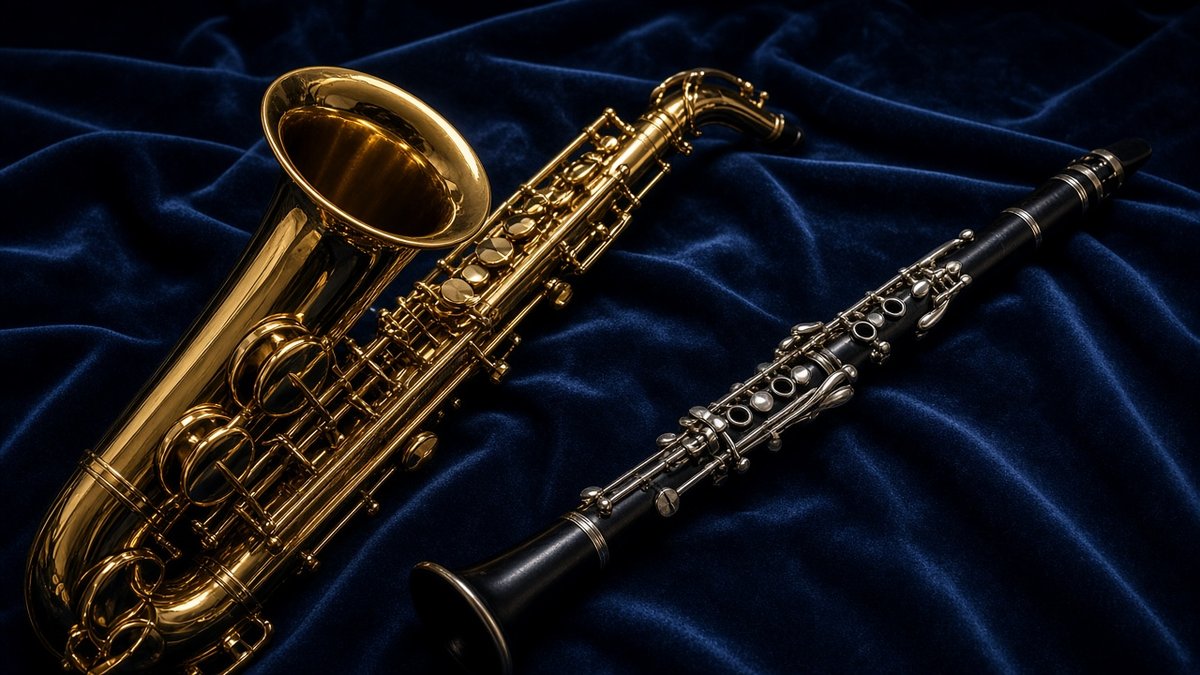
The alto saxophone vs clarinet decision is one many beginners and parents face when choosing a first woodwind instrument. Both are single-reed instruments, both appear across jazz, classical, and concert band, and both reward dedicated practice. However, the alto saxophone vs clarinet comparison reveals two instruments with different learning curves, different roles in music, and different physical demands. Understanding these differences makes the choice much clearer.
Alto Saxophone vs Clarinet: Quick Comparison
| Alto Saxophone | Clarinet | |
|---|---|---|
| Sound | Full, rich, breathy | Warm, pure, wide range |
| Ease of first sound | Easier | Harder |
| Fingering | Simpler, more intuitive | More complex, register break |
| Orchestral use | Rare | Standard |
| Jazz use | Dominant | Common, especially traditional |
| Beginner cost | $400–$1,200 | $200–$400 |
| Weight | Heavier | Lighter |
How They Sound Different
The alto saxophone has a full, rich, slightly breathy tone that is immediately recognisable and emotionally expressive. It projects well and carries a weight of sound that makes it a natural lead voice in jazz and popular music. Because the saxophone responds readily to changes in air and embouchure, players can shape the tone expressively from early in their development.
The clarinet has a warmer, purer tone that shifts character dramatically across its registers. The low chalumeau register is dark and woody, while the upper clarion register is bright and focused. This tonal range across nearly four octaves makes the clarinet one of the most versatile and expressive instruments in music, equally at home in an orchestra, a jazz band, or a klezmer ensemble.
Which Is Easier to Learn?
The alto saxophone is generally easier to start. The mouthpiece angle is natural, the fingering system is intuitive, and most beginners can produce a clean sound within the first few sessions. The saxophone also doesn’t have the clarinet’s notorious register break to contend with in the early stages.
The clarinet is more challenging at first. Developing the embouchure takes weeks, and crossing the break between the low and high registers trips up most beginners for months. However, the clarinet is lighter and smaller, which suits younger children and those with smaller hands. Once past the initial hurdles, both instruments reward dedicated practice equally.
Alto Saxophone: Pros and Cons
- Easier to produce a good sound early
- Dominant in jazz and popular music
- Intuitive fingering system
- Rich, expressive, projecting tone
- More expensive to start
- Heavier to hold for long periods
- Rarely used in orchestral music
Clarinet: Pros and Cons
- Standard orchestral instrument with huge repertoire
- Less expensive to start
- Lighter and easier to hold
- Exceptional tonal range across registers
- Harder to produce a good first sound
- Register break is a tricky early hurdle
- More complex fingering
Which Should You Choose?
Choose the alto saxophone if jazz or popular music is your goal, if you want to produce a satisfying sound quickly, or if you’re drawn to the saxophone’s rich, expressive voice. Choose the clarinet if you want to play in an orchestra, if budget is a concern, if the player is a younger child with smaller hands, or if you value the clarinet’s wider tonal range and versatility across genres.
Many players eventually learn both. Because they share the single-reed embouchure principle, transferring between them is common, and doubling on saxophone and clarinet is a valuable skill for any woodwind player.
Best Beginner Instruments
If you choose the alto saxophone, the Jean Paul AS-400 offers the best value at around $450, while the Yamaha YAS-280 is the premium choice.
View Jean Paul AS-400 on Amazon
If you choose the clarinet, the Yamaha YCL-255 is the most recommended beginner option, with the Jean Paul CL-300 as the best budget alternative.
For a full breakdown of clarinet options, see our guide to the best clarinet for beginners.
FAQ
Is alto saxophone or clarinet easier to learn?
The alto saxophone is generally easier to start because producing a clean first sound is more straightforward and there’s no register break to navigate early on. The clarinet takes longer to get a good sound but is lighter and smaller, which suits younger players.
Should I learn clarinet before saxophone?
It’s not necessary, though many players do. The clarinet’s more demanding embouchure can build skills that transfer well to saxophone. However, you can start with either instrument, and if saxophone is your goal, there’s no need to learn clarinet first.
Which is better for jazz, saxophone or clarinet?
The saxophone is dominant in modern jazz, while the clarinet has a strong history in traditional and Dixieland jazz. For a player primarily interested in contemporary jazz, the alto saxophone is the more natural choice.
Charlotte Moore

Charlotte Moore is a Clarinetist by profession and has over time offered lessons on how to play the clarinet among other musical instruments. And while a majority of clarinet players are well versed with the process of settling with a good clarinet among other accompanying features. There is little information about clarinets. The reason why Charlotte prepared comprehensive experts touching on the various facets of the clarinet. The consolidated information will offer more insight on everything clarinets including the best stand to use, and the best plastic clarinet that you can invest in, among other information. Charlotte Moore is a devoted mother of two and a professional clarinet player.