
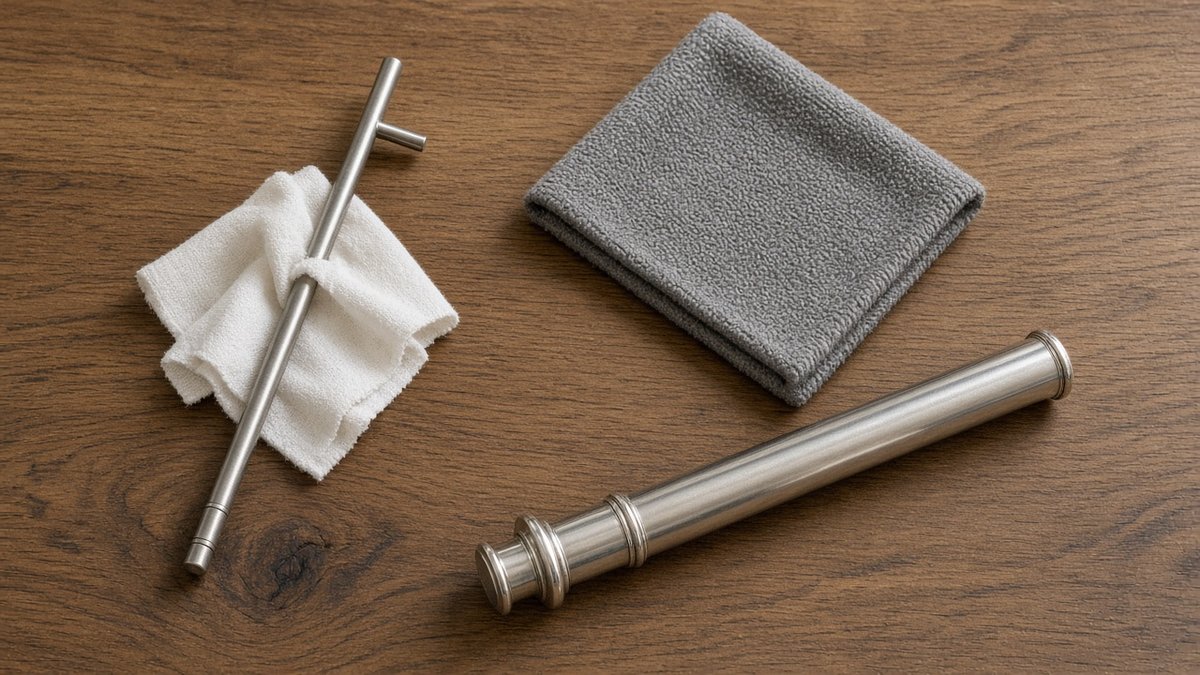
A flute cleaning kit is not a pile of optional extras; it is how you keep pads sealing and silver from spotting. Condensation after every practice session will lift pads and leave a foggy bore if you only wipe the outside. A basic kit costs less than a single pad replacement and lasts for years. Here is what belongs in the case and which kits are worth buying.
Flute Cleaning Kit Contents Compared
| Item | Purpose | Must Have? | Typical Price Alone |
|---|---|---|---|
| Cleaning rod + gauze | Dry the bore after playing | Yes | $5 to $12 |
| Polishing cloth | Remove fingerprints from keys | Yes | $4 to $10 |
| Rod line mark | Check headjoint cork position | Yes (rod does both) | Included |
| Pad papers | Clear sticky pads | Useful | $3 to $8 |
| Key oil (tiny amounts) | Quiet noisy mechanism | Optional | $6 to $12 |
Yamaha Flute Care Kit: The Safe Default
Yamaha’s student care kit includes a plastic cleaning rod, gauze squares and a polishing cloth sized for flute. Plastic rods will not scratch the bore the way a steel rod can if gauze slips, which is why most teachers prefer them for beginners.
- Plastic rod is bore-safe for students
- Gauze and cloth included
- Fits in most flute cases
- Trusted brand matching many student flutes
- Gauze runs out and needs restocking
- Some versions omit pad papers
Herco / Generic Complete Kits: Budget Pick
Budget kits bundle a rod, swab cloth, polishing cloth and sometimes pad papers for under twenty dollars. Quality varies, so check that the rod is plastic or wood rather than bare metal, and that the gauze is large enough to wrap the rod without leaving metal exposed.
- Cheap way to get every basic item at once
- Easy gift for a new flute student
- Usually includes extras like pad paper
- Rod quality is hit and miss
- Cloths wear out faster than branded ones
Separate Rod and Silk Swab: Pro Style Setup
Many intermediate players skip the all-in-one kit and buy a good plastic or wooden rod plus a dedicated flute gauze or silk swab strip. This combination dries the bore more thoroughly and lets you replace cloths without buying another rod.
- Better absorbency than tiny kit gauze
- You control each component quality
- Rod doubles as a cork-position gauge
- Costs a little more than a starter kit
- Requires knowing which rod length fits your flute
How to Use a Flute Cleaning Kit After Practice
Disassemble the flute into headjoint, body and foot. Wrap clean gauze snugly around the rod so no rod surface shows, then pass it through each section until the cloth comes out barely damp. Wipe the headjoint crown gently and polish fingerprints from the keys with the soft cloth. Never use household polish on pads or tone holes.
Check the headjoint cork line on the rod occasionally: the mark should sit centred in the embouchure hole when the rod is inserted. If it has drifted, a technician should reset it. Our guides to the best flute cleaning rod and how to assemble a flute cover the related steps. For corks on other woodwinds, keep Vandoren cork grease nearby, though most flutes need little or none on the tenon.
Frequently Asked Questions
How often should I clean my flute?
Swab the bore after every session, even short ones. Polish the exterior a few times a week, and use pad paper only when a key sticks.
Can I wash the gauze in a washing machine?
Yes, on a gentle cycle without fabric softener. Replace gauze when it frays or smells musty.
Is a metal cleaning rod safe?
Only if the gauze always fully covers it. Plastic or wood is safer for students and schools.
Charlotte Moore

Charlotte Moore is a Clarinetist by profession and has over time offered lessons on how to play the clarinet among other musical instruments. And while a majority of clarinet players are well versed with the process of settling with a good clarinet among other accompanying features. There is little information about clarinets. The reason why Charlotte prepared comprehensive experts touching on the various facets of the clarinet. The consolidated information will offer more insight on everything clarinets including the best stand to use, and the best plastic clarinet that you can invest in, among other information. Charlotte Moore is a devoted mother of two and a professional clarinet player.