
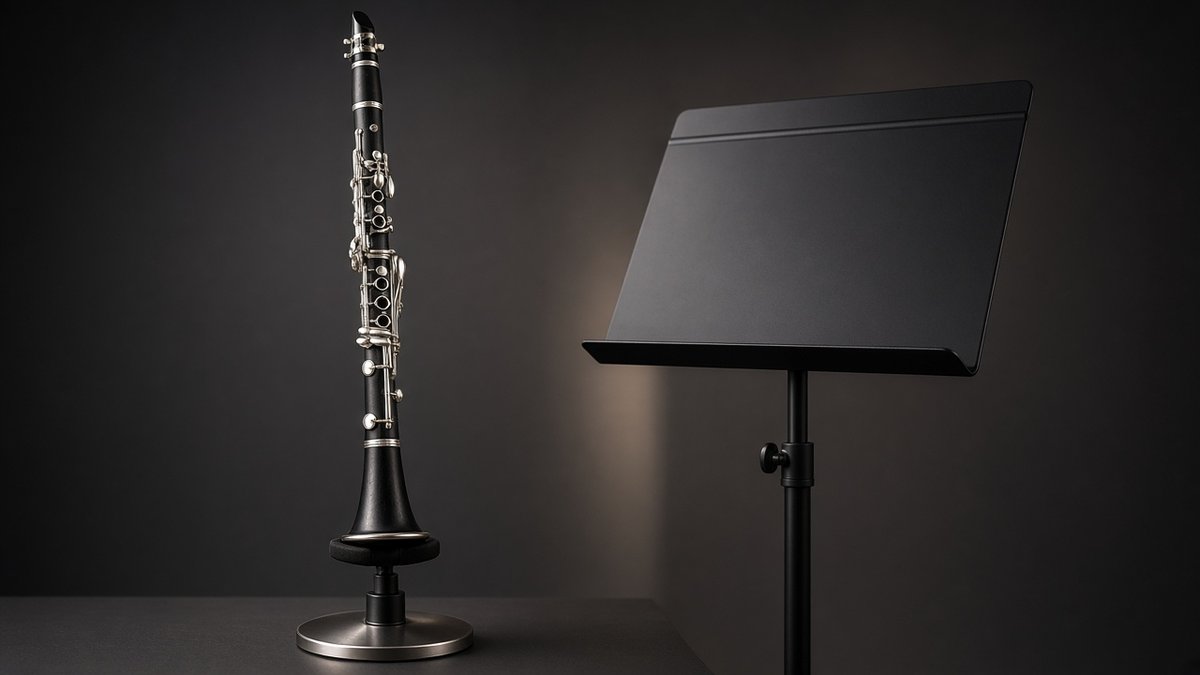
The Buffet E12F sits in an awkward but useful place: above the E11 that most step-up buyers consider, below the R13 that professionals play, and priced around $1,600. It is the instrument teachers recommend when a student has outgrown their first wooden clarinet but is not ready to spend three thousand dollars. Here is what the E12F does, where it differs from its siblings, and whether it deserves your money.
Buffet E12F Specifications
| Feature | Detail |
|---|---|
| Body | Unstained grenadilla |
| Key system | Boehm, 17 keys and 6 rings |
| Keys | Silver plated, forged |
| Bore | Poly-cylindrical, related to the R13 design |
| Included | Case, mouthpiece, ligature, swab |
| Approx price | $1,600 |
How the Buffet E12F Plays
The first thing players notice is the low register, which has more body and warmth than any resin clarinet can produce. The grenadilla does part of that work, but the bore design does more, and it is closely related to the one Buffet uses further up the range.
Intonation is dependable across the break, which matters because this is exactly the point in a student’s development where they start playing music that lives in the upper register. The keywork is forged rather than cast, so it holds its adjustment longer than the budget wooden clarinets it competes against.
Response at soft dynamics is where it separates itself from the E11. Quiet playing stays centred instead of thinning out, which makes chamber and orchestral work far less stressful.
- Warm, resonant low register from the grenadilla body
- Bore design closely related to the professional R13
- Forged keywork that stays in regulation
- Reliable intonation across the break
- Holds resale value well
- Needs a break-in period and humidity control
- Supplied mouthpiece is worth replacing immediately
- Around $400 more than the E11 for a modest gain
- Heavier than a resin instrument
E11, E12F or R13?
The E11 at around $1,200 is the usual first wooden clarinet and it is a good instrument. The E12F adds refinement rather than transformation: a little more evenness, a little more warmth, slightly better keywork. Whether that is worth $400 depends on how much the student plays.
The R13 at around $3,000 is a different conversation. It is the professional standard and the jump is genuinely large, but it only pays off for a player whose technique can use it. A high school student heading toward a music degree should consider saving for the R13 instead of buying the E12F first.
Our guides to the best clarinets for intermediate players and the best professional clarinets lay out both tiers, and the Buffet E11 review covers the model directly below this one.
Care and Setup
Buy a case humidifier on day one and follow a break-in schedule of short sessions for the first few weeks, since grenadilla cracks when it is asked to do too much too soon. Swab after every session and have the instrument serviced annually.
Budget another $100 to $150 for a proper mouthpiece. The one in the case is serviceable but holds the instrument back, and a better mouthpiece changes the sound more than the step from E11 to E12F does. See our guide to the best clarinet mouthpieces.
Frequently Asked Questions
Is the Buffet E12F a professional clarinet?
No, it is an advanced intermediate instrument. It is more than good enough for school, community and amateur orchestral playing.
What does the F in E12F mean?
It denotes the French made version with keywork and finishing done in France rather than assembled elsewhere, which is the version most players want.
Can a beginner start on one?
They can, but a resin clarinet is the wiser first purchase. Wood needs care that most beginners are not ready to provide.
Charlotte Moore

Charlotte Moore is a Clarinetist by profession and has over time offered lessons on how to play the clarinet among other musical instruments. And while a majority of clarinet players are well versed with the process of settling with a good clarinet among other accompanying features. There is little information about clarinets. The reason why Charlotte prepared comprehensive experts touching on the various facets of the clarinet. The consolidated information will offer more insight on everything clarinets including the best stand to use, and the best plastic clarinet that you can invest in, among other information. Charlotte Moore is a devoted mother of two and a professional clarinet player.