
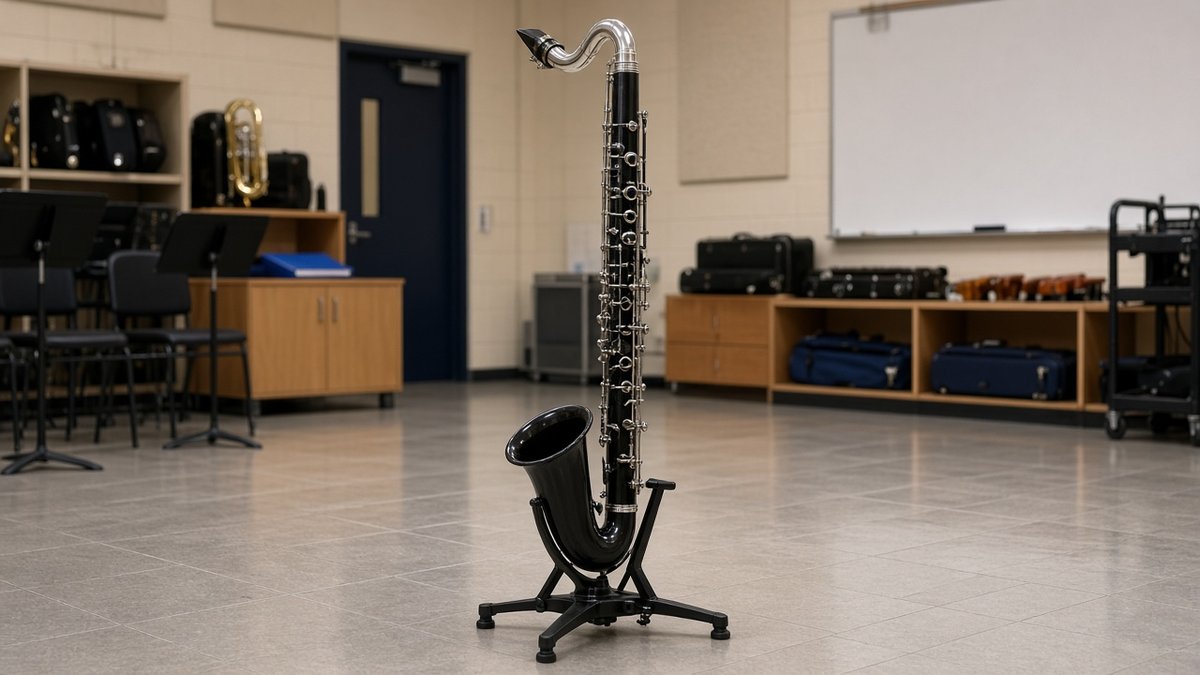
The Yamaha YCL-221II is the bass clarinet most school programmes own, and for good reason. It costs around $3,500, has an ABS resin body that survives storage rooms and touring vans, and plays in tune in a register where cheap instruments simply do not. If a student is moving from soprano clarinet to bass, this is almost always the instrument they will be handed. Here is what it does well and what its limits are.
Yamaha YCL-221II Specifications
| Feature | Detail |
|---|---|
| Body | ABS resin with wood grain finish |
| Range | To low E flat |
| Keys | Silver plated, adjustable thumb rest |
| Neck and bell | Silver plated brass |
| Included | Case, mouthpiece, neck strap, floor peg |
| Approx price | $3,500 |
How It Plays
Bass clarinets are hard to make well because the low register exposes every flaw in bore geometry and pad sealing. The YCL-221II handles it. The bottom of the range speaks cleanly without the honking that plagues budget instruments, and the throat notes are far more even than the price would suggest.
The resin body is the practical argument. School bass clarinets live in cupboards, travel on buses and get handled by students who have never carried anything that large. Resin ignores all of that, while a wooden bass clarinet in the same circumstances would crack within a season.
Ergonomics are thought through. The adjustable thumb rest and the floor peg together take the weight properly, which matters because this instrument is heavy and young players otherwise end up fighting it.
- Clean, stable low register that many rivals cannot match
- Resin body will not crack in school conditions
- Adjustable thumb rest and floor peg for comfort
- Strong resale demand, since programmes always need them
- Complete package including case and neck strap
- Range stops at low E flat rather than low C
- Supplied mouthpiece limits the sound noticeably
- Tone lacks the depth of a professional wooden instrument
- Heavy and bulky to transport
The Low C Question
The Yamaha YCL-221II goes down to low E flat. Professional bass clarinets extend to low C, and a fair amount of orchestral repertoire uses those bottom notes. For concert band, school orchestra and most community groups, low E flat is sufficient and the parts are written accordingly.
If a player is heading toward conservatory auditions or serious orchestral work, they will eventually need a low C instrument, and those start around $7,000. That is a later problem rather than a reason to avoid the YCL-221II now.
The Upgrade Worth Making
If you own a Yamaha YCL-221II, change the mouthpiece. The stock piece is the weakest part of the package by a distance, and a decent replacement at $120 to $200 transforms the low register response and makes the instrument far easier to control at volume. It is the cheapest meaningful improvement available.
Beyond that, keep the neck and mouthpiece swabbed, check the floor peg height each session and have the pads inspected annually. Our guides to the best bass clarinets and the best clarinet mouthpieces cover the alternatives and the upgrade path.
Frequently Asked Questions
Can a soprano clarinet player switch to the Yamaha YCL-221II easily?
Yes. The fingering is the same, though the instrument needs much more air and a looser embouchure. Most players adapt within a few weeks.
Is resin a downgrade from wood?
For durability it is an upgrade. For tone, a professional wooden bass clarinet is warmer, but it costs twice as much and needs careful climate control.
Is it suitable for an adult amateur?
Very much so. It is the standard instrument in community bands and handles everything short of professional orchestral work.
Charlotte Moore

Charlotte Moore is a Clarinetist by profession and has over time offered lessons on how to play the clarinet among other musical instruments. And while a majority of clarinet players are well versed with the process of settling with a good clarinet among other accompanying features. There is little information about clarinets. The reason why Charlotte prepared comprehensive experts touching on the various facets of the clarinet. The consolidated information will offer more insight on everything clarinets including the best stand to use, and the best plastic clarinet that you can invest in, among other information. Charlotte Moore is a devoted mother of two and a professional clarinet player.