
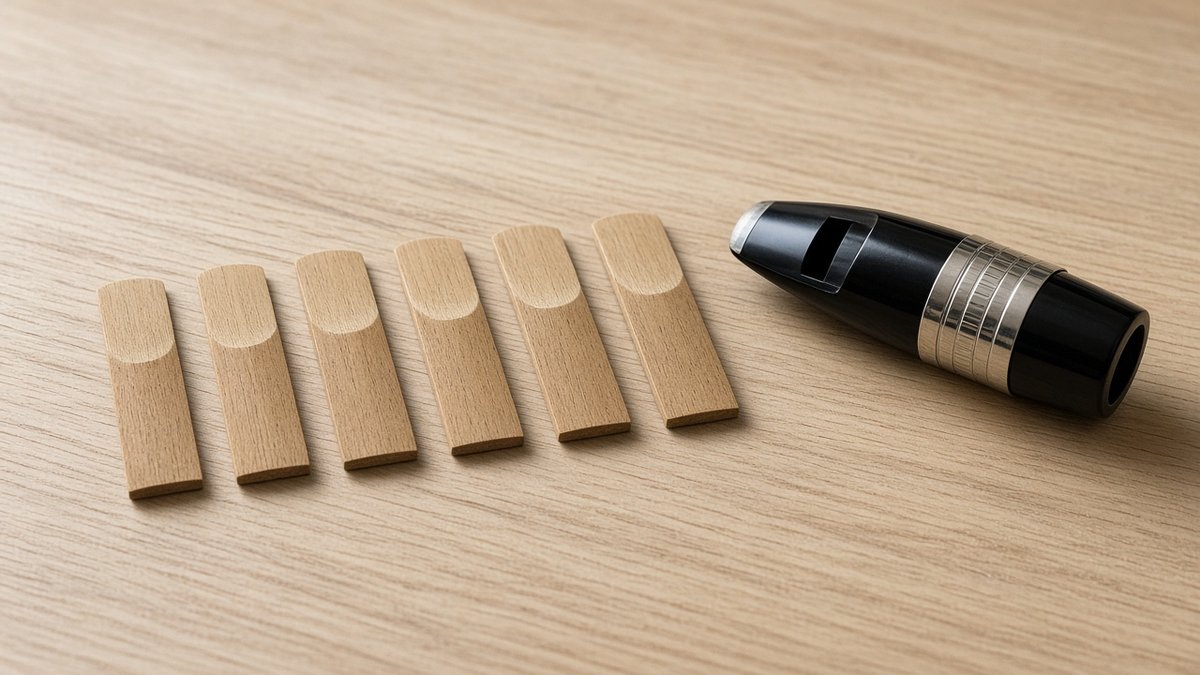
Learning how to choose clarinet reed strength saves months of squeaks and fatigue. The numbers on the box (2, 2.5, 3 and so on) describe relative stiffness, not quality. A strength that is too hard makes soft dynamics and high notes miserable; too soft collapses under a stronger embouchure and sounds thin. Here is how to pick between 2, 2.5 and 3 as a student.
Clarinet Reed Strengths Compared
| Strength | Feel | Typical Player | Watch Outs |
|---|---|---|---|
| 2 | Soft, easy vibration | Beginners, young students | Can sound buzzy if overblown |
| 2.5 | Medium soft | Late first year / second year | Most common school step-up |
| 3 | Medium | Developing embouchures | Too hard if tone is forced |
| 3.5+ | Firm | Advanced / some mouthpieces | Not a beginner flex |
Strength 2: Where Most Beginners Start
Strength 2 is the usual first box for brand new clarinetists, especially on closed student mouthpieces. It speaks with less air and forgiving embouchure pressure. If every note requires a death grip, stay on 2 longer rather than moving up to impress anyone.
- Easier first sound
- Less embouchure fatigue in early weeks
- Works with many kit mouthpieces
- May feel unstable as air support improves
- Soft tips wear out faster
Strength 2.5: The School Band Workhorse
Once tone centres and the student can play controlled soft notes on a 2, 2.5 is the natural next step. Many school band rooms effectively standardise here. The reed holds up better to louder dynamics without feeling like a plank.
- Balanced for most student literature
- Clearer articulation than a dying soft 2
- Wide availability across brands
- Feels hard if the mouthpiece facing is very closed
- Boxes still vary reed to reed
Strength 3: Only When 2.5 Feels Soft
Move to 3 when 2.5 reeds feel mushy within a few days, soft dynamics spread, or the teacher hears instability that is not caused by leaks. Do not jump to 3 to chase a darker professional sound on a student setup; fix leaks and mouthpiece match first.
- More core to the sound for stronger players
- Better stability in louder playing
- Common on intermediate mouthpieces
- Punishing if embouchure is not ready
- Can encourage biting
Brand, Mouthpiece and Strength Interact
Vandoren Traditional, Rico Royal and JUNO cut differently; a 2.5 in one brand is not identical to a 2.5 in another. Closed student mouthpieces often want softer reeds than open jazz-style facings. If you upgrade the mouthpiece, reassess strength rather than assuming the old number still fits. A student mouthpiece such as the JUNO J5 pairs well with softer student cuts:
Also remember that a leaking clarinet feels like a hard reed. Before you keep buying stronger boxes, have a technician check pads, especially if high notes will not speak. Daily care still matters: swab after practice and keep corks greased so the instrument is not the variable.
Reliable clarinets make reed experiments fairer. Student favourites include the Yamaha YCL-255 and Jean Paul CL-300; advancing players may look at Buffet E11 / E12 territory.
Frequently Asked Questions
Is 2.5 always better than 2?
No. Better means appropriate. A strong player on a soft reed and a beginner on a hard reed are both mismatched.
Why do reeds in the same box feel different?
Cane is a natural material. Expect a few duds per box; that is normal, not always a fake product.
How often should I change strength?
Only when your current strength consistently feels wrong for weeks, ideally with a teacher’s confirmation. Changing every week prevents adaptation.