
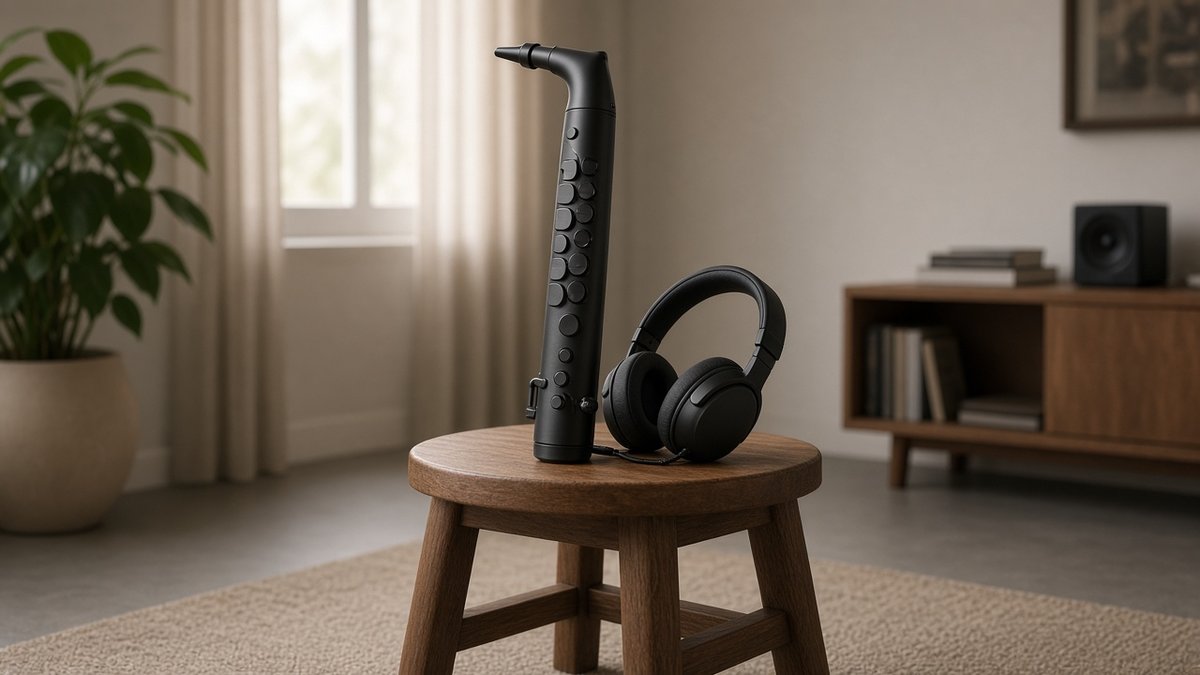
A digital saxophone solves the problem every sax player eventually runs into: an acoustic horn is loud, and most people live somewhere that makes practising after eight in the evening impossible. These instruments use real saxophone fingering, a breath sensor and a headphone jack, so you can practise silently at midnight or plug into a PA at a gig. Prices run from about $375 to $800. Here are the models worth buying and who each one suits.
Digital Saxophone Comparison
| Model | Sounds | Best For | Approx Price |
|---|---|---|---|
| Yamaha YDS-150 | 73 | Sax players who want realistic feel | $720 |
| Yamaha YDS-120 | 73 | Budget silent practice | $400 |
| Roland Aerophone AE-20 | 250 plus | Sound variety and live use | $1,100 |
| Akai EWI Solo | 200 | Cheapest full featured option | $385 |
Yamaha YDS-150: The Closest to a Real Sax
The YDS-150 is built around an actual brass bell, which is why it feels and responds more like an acoustic horn than anything else in the category. It uses a real mouthpiece and synthetic reed, standard sax keywork and sampled Yamaha saxophones for its core voices.
- Real mouthpiece and reed, so embouchure work transfers
- Integrated brass bell gives natural acoustic feedback
- Fifteen volume levels plus headphone output for silent practice
- Fewer sounds than the Roland models
- Runs on AA batteries rather than a rechargeable pack
Yamaha YDS-120: The Affordable Version
The 120 keeps the same key layout and voice set but uses a recorder style mouthpiece and drops the brass bell. That makes it roughly half the price and lighter, at the cost of some of the acoustic realism.
- Around half the price of the YDS-150
- Same sax key configuration and 73 voices
- Light and easy to travel with
- Recorder style mouthpiece does not train embouchure
- Less natural resonance without the bell
Roland Aerophone AE-20: The Sound Library Option
If you want more than saxophone voices, the Roland is the better instrument. Over 250 sounds cover sax, clarinet, flute, brass, strings and synth tones, and you can switch fingering systems to match whichever instrument you actually play.
- Huge sound library including synth voices
- Sax, clarinet, flute, recorder and brass fingering modes
- Bluetooth audio and MIDI for practice and recording
- Considerably more expensive
- Key action feels less like an acoustic sax
Akai EWI Solo: Best Value
The EWI uses touch contacts rather than moving keys, which takes adjustment but allows very fast playing. It has a rechargeable battery, a built in speaker and 200 sounds, all for less than half the price of the Roland.
- Cheapest way into a capable digital wind instrument
- Rechargeable battery and built in speaker
- Seven octave range and very fast key response
- Touch contacts feel nothing like sax keys
- Breath response is less nuanced than Yamaha or Roland
Who Should Buy One
A digital saxophone makes most sense as a second instrument rather than a first. If you already play, it gives you practice hours you would otherwise lose to neighbours, plus a sound palette an acoustic horn cannot touch. For a complete beginner it is a poor first choice, because embouchure and tone production are the skills that matter and only the YDS-150 develops them meaningfully.
Also budget for headphones, since the built in speakers are quiet by design. If you are shopping for an acoustic horn instead, see our roundup of the best alto saxophones for beginners and our guide to how much a saxophone costs.
Frequently Asked Questions
Can a digital saxophone replace an acoustic one?
For practice and for certain gigs, yes. For classical playing, auditions and section work, no. Most owners keep both.
Do they use real saxophone fingering?
Yamaha and Roland both use standard sax fingering. The Akai EWI uses its own touch system that takes a few weeks to learn.
Are they genuinely silent?
With headphones, effectively yes. You still hear breath noise and key clicks, but neighbours will not hear the instrument.
Charlotte Moore

Charlotte Moore is a Clarinetist by profession and has over time offered lessons on how to play the clarinet among other musical instruments. And while a majority of clarinet players are well versed with the process of settling with a good clarinet among other accompanying features. There is little information about clarinets. The reason why Charlotte prepared comprehensive experts touching on the various facets of the clarinet. The consolidated information will offer more insight on everything clarinets including the best stand to use, and the best plastic clarinet that you can invest in, among other information. Charlotte Moore is a devoted mother of two and a professional clarinet player.