
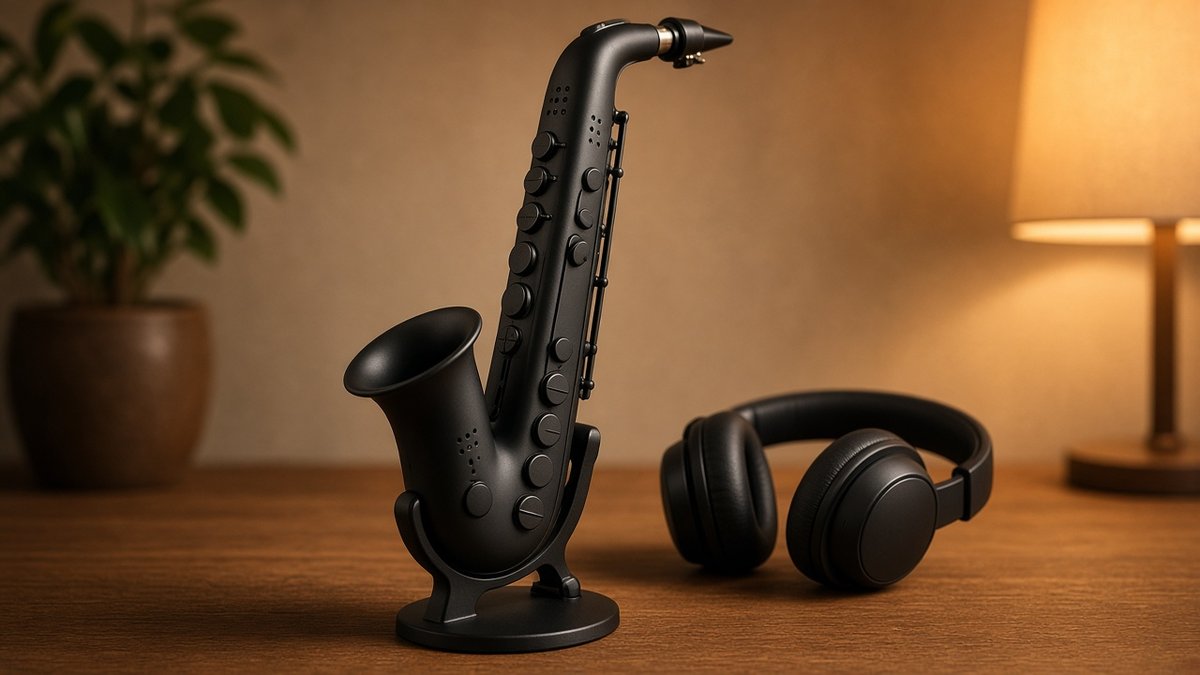
The Yamaha YDS-150 is the digital saxophone that finally convinced acoustic players the category was worth taking seriously. It costs around $720, uses a real mouthpiece and reed, and has a brass bell built into the body. Yamaha’s aim was clearly not to build a synth controller but a saxophone you can play at midnight. After looking at what it does well and where it falls short, here is who should buy one.
Yamaha YDS-150 Specifications
| Feature | Detail |
|---|---|
| Voices | 73, including soprano, alto, tenor and baritone sax |
| Mouthpiece | Standard alto mouthpiece with synthetic reed |
| Bell | Integrated brass, part of the acoustic system |
| Volume levels | Fifteen, plus headphone output |
| Connectivity | USB MIDI, aux in, headphone out |
| Power | AA batteries or USB |
What the Yamaha YDS-150 Does Well
The mouthpiece is the headline feature. Because it takes a standard alto mouthpiece and a synthetic reed, your embouchure has to work properly, and everything you build on this instrument transfers to your acoustic horn. No other digital wind instrument in this price range does that.
The Integrated Bell Acoustic System is the second. Sound comes out of a real brass bell rather than a plastic speaker grille, which gives physical feedback through the instrument as you play. It sounds obvious, but it is the reason the YDS-150 feels alive in a way its rivals do not.
Breath response is the third. The sensor tracks intensity rather than just volume, so dynamics shape tone as well as level. The sampled saxophone voices come from Yamaha’s own acoustic horns recorded with professional players, and in the middle registers they are convincing enough that listeners in another room will assume you are playing a real sax.
- Real mouthpiece and reed, so technique transfers both ways
- Brass bell gives natural resonance and feedback
- Fifteen volume levels and headphone practice at any hour
- Standard saxophone keywork with no learning curve
- Sampled Yamaha saxophones across four sax types
- 73 voices is modest next to Roland’s 250 plus
- AA batteries rather than a rechargeable pack
- Saxophone fingering only, no clarinet or flute mode
- Onboard speaker is quiet without headphones or a PA
Where It Falls Short
Sound variety is the obvious limit. If you want synth pads, string sections and hundreds of editable tones, the Roland Aerophone range does that and the Yamaha YDS-150 does not pretend to. The app adds editing and custom presets, but the underlying library is still built around saxophone.
Battery life on AA cells is the other irritation, particularly for anyone gigging. Most owners run it from a USB power bank instead, which works but adds a cable to manage.
The key action, while familiar, is lighter than an acoustic horn. It is close enough that muscle memory carries over, but it will not build finger strength the way a real saxophone does.
Who Should Buy It
Buy the YDS-150 if you already play saxophone and lose practice hours to neighbours, thin walls or late working days. It is also a good choice for adult returners who want to rebuild embouchure without annoying anyone, and for gigging players who want a quiet warm up instrument backstage.
Skip it if you are a complete beginner, since a real horn and a teacher will serve you better. Skip it too if you play clarinet or flute, because the fingering is saxophone only and a Roland will suit you far better. For the alternatives, see our Roland Aerophone vs Yamaha YDS comparison and our roundup of the best digital saxophones.
Frequently Asked Questions
Does the Yamaha YDS-150 need a real reed?
It ships with a synthetic reed and takes standard alto mouthpieces. Cane reeds work, though synthetic lasts longer and needs no soaking.
Is it loud enough to play in a band?
Not on its own speaker. Connect it to a PA or amplifier through the headphone output and it holds its own comfortably.
How does it compare with the cheaper YDS-120?
The 120 keeps the keywork and voices but uses a recorder style mouthpiece and drops the brass bell, which costs it most of the realism for around half the price.
Charlotte Moore

Charlotte Moore is a Clarinetist by profession and has over time offered lessons on how to play the clarinet among other musical instruments. And while a majority of clarinet players are well versed with the process of settling with a good clarinet among other accompanying features. There is little information about clarinets. The reason why Charlotte prepared comprehensive experts touching on the various facets of the clarinet. The consolidated information will offer more insight on everything clarinets including the best stand to use, and the best plastic clarinet that you can invest in, among other information. Charlotte Moore is a devoted mother of two and a professional clarinet player.