
I’ve gone through a lot of reeds over the years. Most of them were fine. Some were great. A few were a complete waste of money.
The thing about reeds is that nobody tells you the truth upfront. That half the reeds in any box won’t play well, that brand matters more than most people admit, and that the cheapest option almost always costs you more in the long run. Here’s what I’d actually tell a friend who asked.
Best Clarinet Reeds 2026, Quick Comparison
| Reed | Best For | Strength Options | Pack Size |
|---|---|---|---|
| Vandoren CR103 Traditional | All-around best | 1 – 5 | Box of 10 |
| Rico by D’Addario RCA1025 | Beginners | 2 – 4 | Box of 10 |
| D’Addario Royal RCB1025 | Classical & jazz | 2 – 4 | Box of 10 |
| Vandoren V12 CR193 | Intermediate players | 2.5 – 4 | Box of 10 |
| Légère Classic BB2.50 | Travel / no fuss | 2 – 4 | Single reed |
1. Vandoren CR103 Traditional
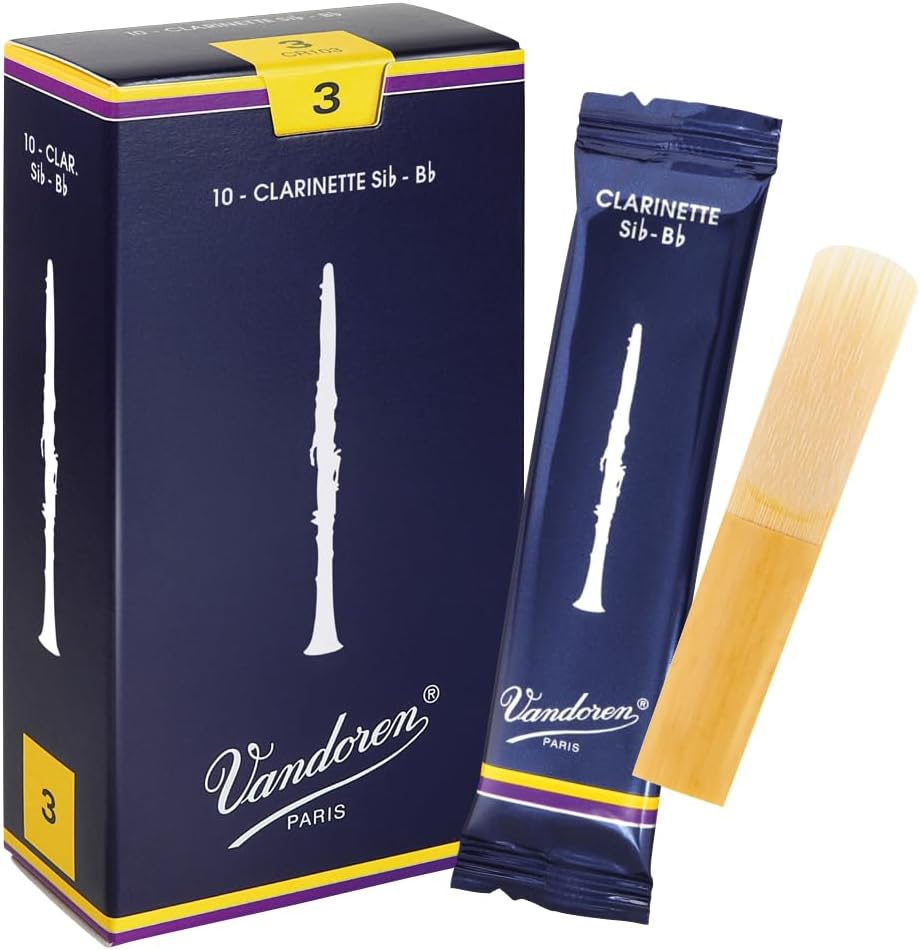
This is the blue box. If you’ve ever been to a music store and looked at the clarinet reed section, you’ve seen it. Vandoren has been making reeds in France since 1905 and the Traditional line is still their most popular, not because of marketing, but because it keeps working.
What I like about it: the reeds are individually sealed in Flow Packs, so they stay fresh until you open them. That matters. Reeds that sit loose in a cardboard box can start drying out before you even play them. You get consistent response across all registers, and if you buy a box of 10, you’ll almost certainly find 7 or 8 that play well straight away.
Start with strength 2.5. Move to 3 after six months or so, you’ll know when the 2.5 starts feeling too easy.
- Consistent from box to box
- Individually sealed for freshness
- Works from beginner to professional level
- A bit pricier than Rico, but worth it
2. Rico by D’Addario RCA1025
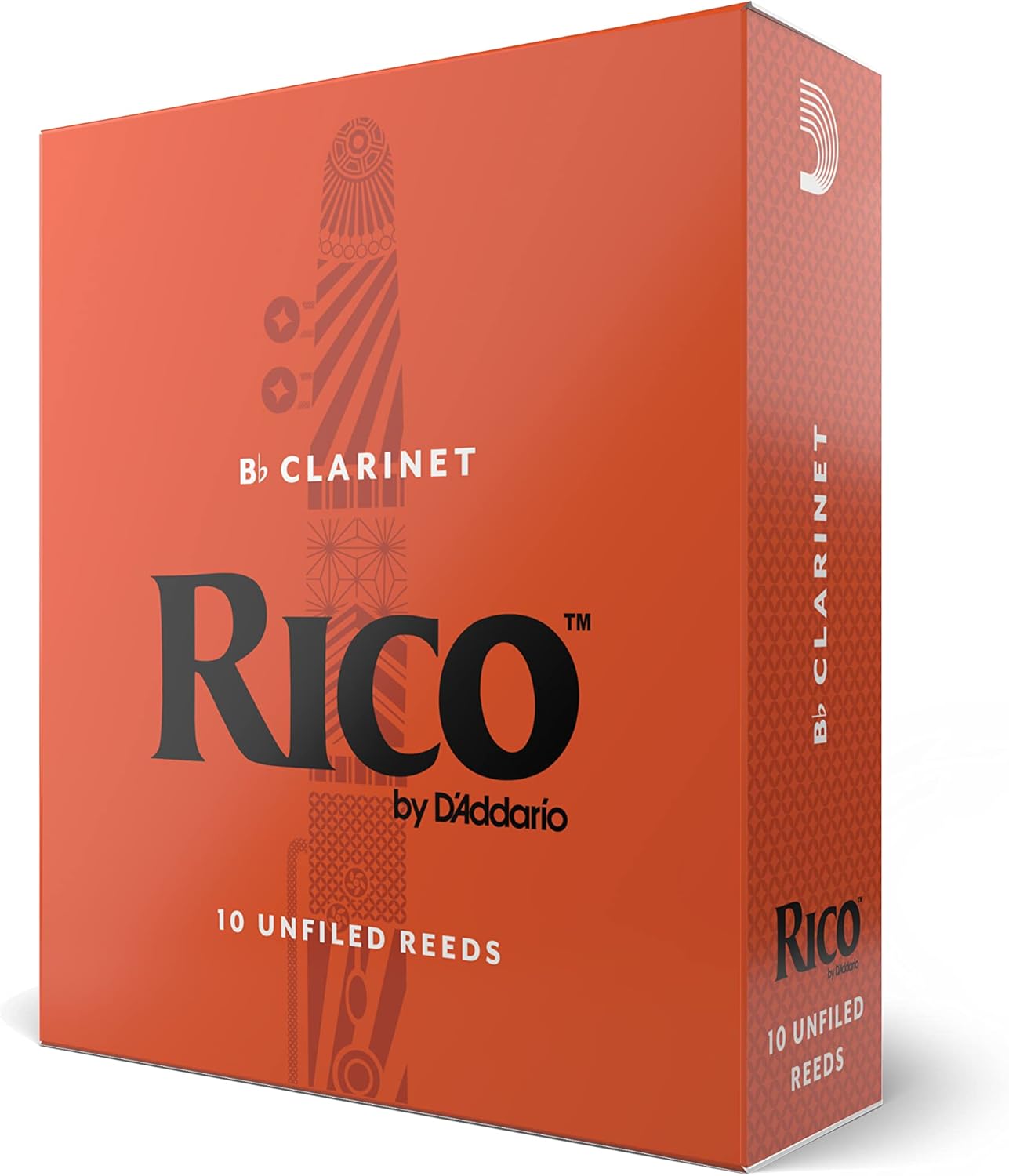
Rico is what most school band programs hand to students on the first day, and there’s a practical reason for that. The reeds are cut thinner than Vandoren, which makes them easier to get a sound out of when your embouchure is still developing. Less resistance, more forgiveness.
They’re also considerably cheaper. When you’re learning and burning through reeds quickly, that’s not nothing. The tone is brighter than Vandoren, some players like that, others don’t. Most people move on from Rico after a year or two, but for the early stages they do the job well.
- Easiest reed to produce a sound on
- Affordable, good for learning
- Bright, clear tone
- Less consistency between individual reeds than Vandoren
3. D’Addario Royal RCB1025

The Royal sits between Rico and Vandoren in both price and quality. The French filed cut, where they remove material from the back of the reed rather than the tip, gives you noticeably faster response and a warmer sound in the low register.
It’s the reed I’d recommend to someone who’s been playing for 6–12 months, has outgrown Rico, but isn’t ready to spend Vandoren money yet. Good stepping stone, and it works particularly well for jazz playing where you want a bit more flexibility.
- French filed cut gives faster response
- Warmer tone than Rico
- Good middle-ground price
- Not quite as consistent as Vandoren
4. Vandoren V12 CR193
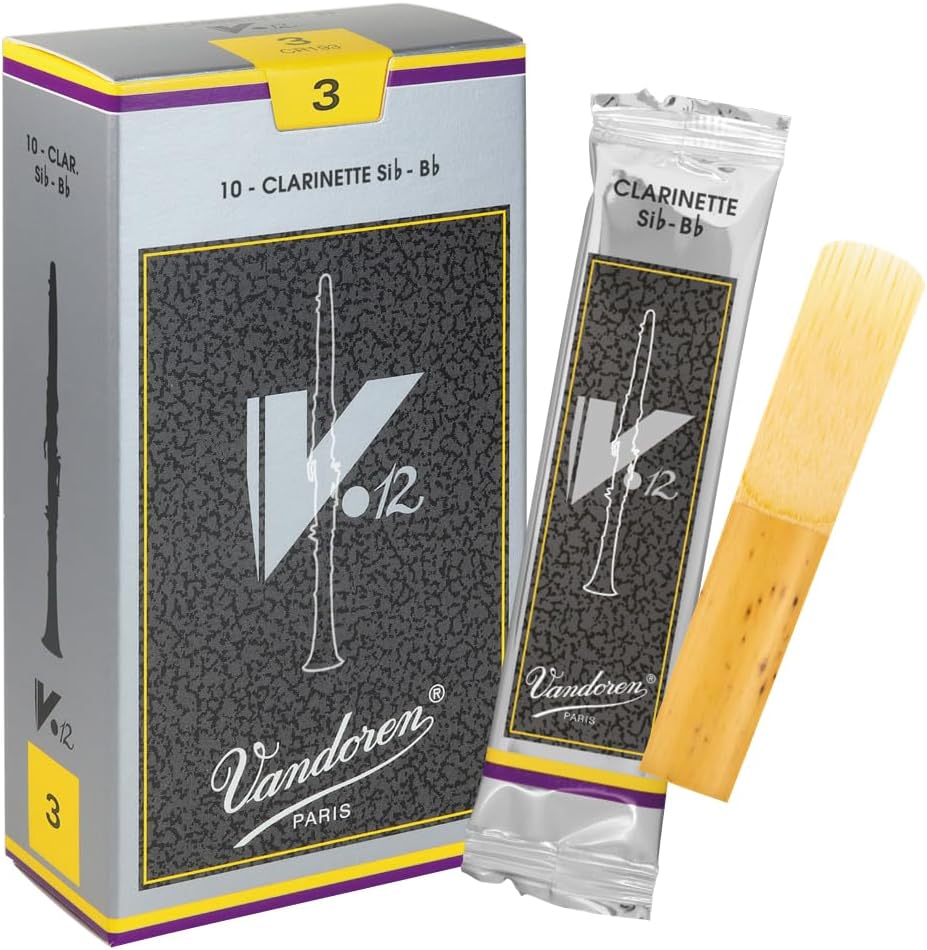
The V12 is what I switched to after a few years on the Traditional, and I noticed a difference within the first practice session. The longer vamp and thicker heel change the way the reed vibrates. You get more depth, more projection, and a darker sound that sits better in ensemble playing.
It does require a stronger embouchure. If you’re newer to the instrument, you’ll find it tiring and maybe a little stuffy. But once you’re ready for it, the V12 is hard to go back from. Jazz players especially tend to love this reed.
- Fuller, darker sound than the Traditional
- More projection, cuts through in ensemble settings
- Individually sealed in Flow Pack
- Not for beginners, needs a developed embouchure
5. Légère Classic BB2.50
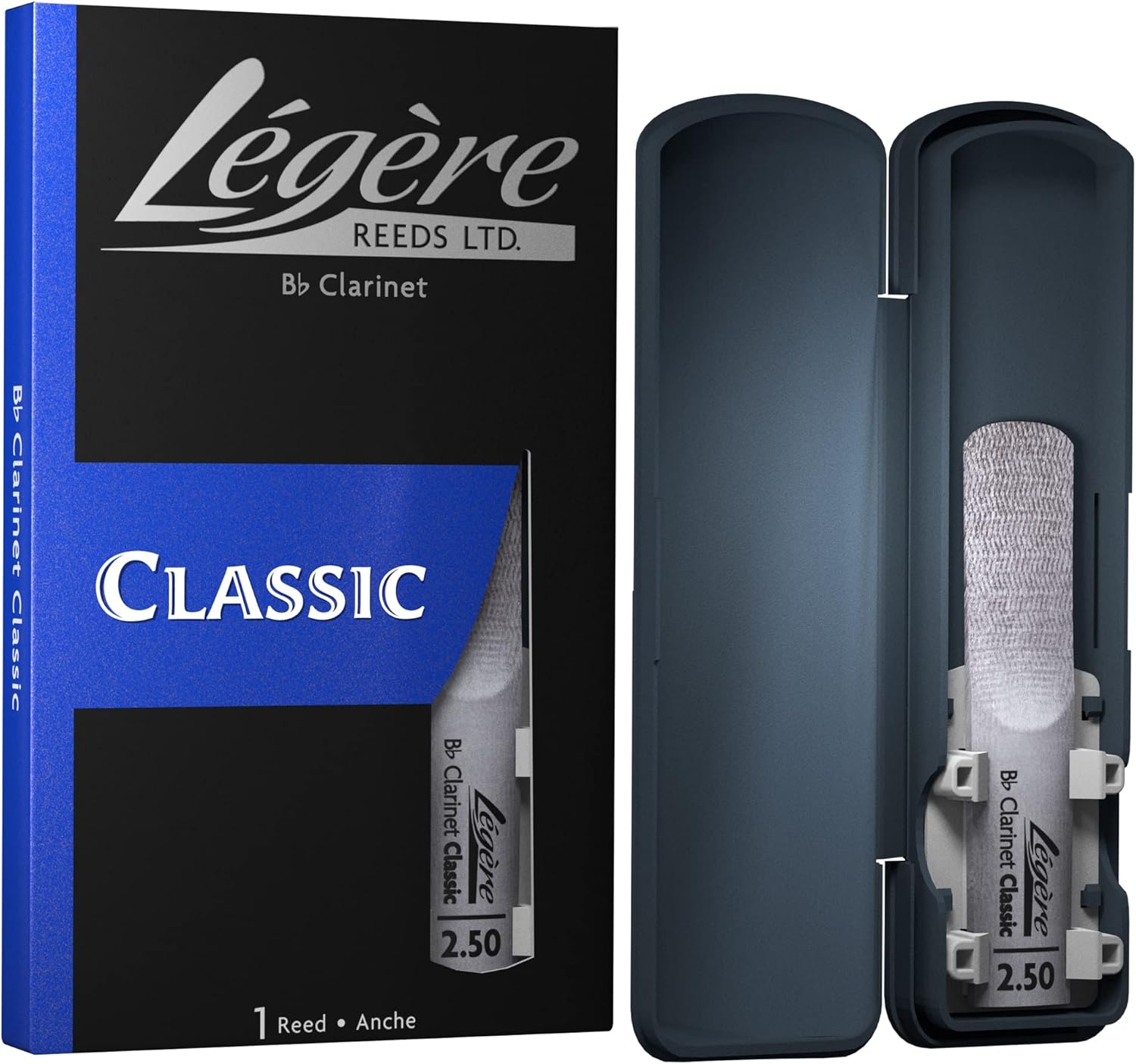
Synthetic reeds get a bad reputation they don’t fully deserve anymore. The Légère Classic isn’t going to replace cane for most players in a concert setting, but it’s genuinely useful in situations where cane is impractical.
Playing outside? The humidity will ruin a cane reed in an hour. Traveling and forgot to soak your reeds? Légère plays straight out of the case. Pit orchestra gig where you’re switching instruments quickly? Same thing. I keep one in my case as a backup and have been glad of it more than once.
- Ready to play immediately, no soaking
- Lasts months instead of days
- Completely unaffected by humidity or temperature
- Feels slightly different from cane, takes a session to adjust
- Higher upfront cost, but lasts far longer
Which Strength Should You Buy?
This is the question I get asked most often, and the honest answer is: start softer than you think you need.
Most beginners are told to buy a 3 and then spend months fighting a reed that’s too hard for where they are. A 2.5 will let you focus on your sound and technique without the reed working against you. You’ll know it’s time to go up a strength when things start feeling too easy and you want more resistance.
One more thing: strength numbers don’t mean the same thing across brands. A Vandoren 3 plays harder than a Rico 3. If you’re switching brands, go half a step softer until you know how the new reed feels.
Cane or Synthetic?
Cane, for most playing. The tone is warmer and more alive, and there’s still something about cane vibration that synthetic hasn’t fully replicated. Légère and other synthetic brands have gotten very good, but for practice and performance, cane is still the standard.
That said, keep a synthetic reed in your case. You’ll thank yourself eventually.
As an Amazon Associate, I earn from qualifying purchases.
Charlotte Moore

Charlotte Moore is a Clarinetist by profession and has over time offered lessons on how to play the clarinet among other musical instruments. And while a majority of clarinet players are well versed with the process of settling with a good clarinet among other accompanying features. There is little information about clarinets. The reason why Charlotte prepared comprehensive experts touching on the various facets of the clarinet. The consolidated information will offer more insight on everything clarinets including the best stand to use, and the best plastic clarinet that you can invest in, among other information. Charlotte Moore is a devoted mother of two and a professional clarinet player.