
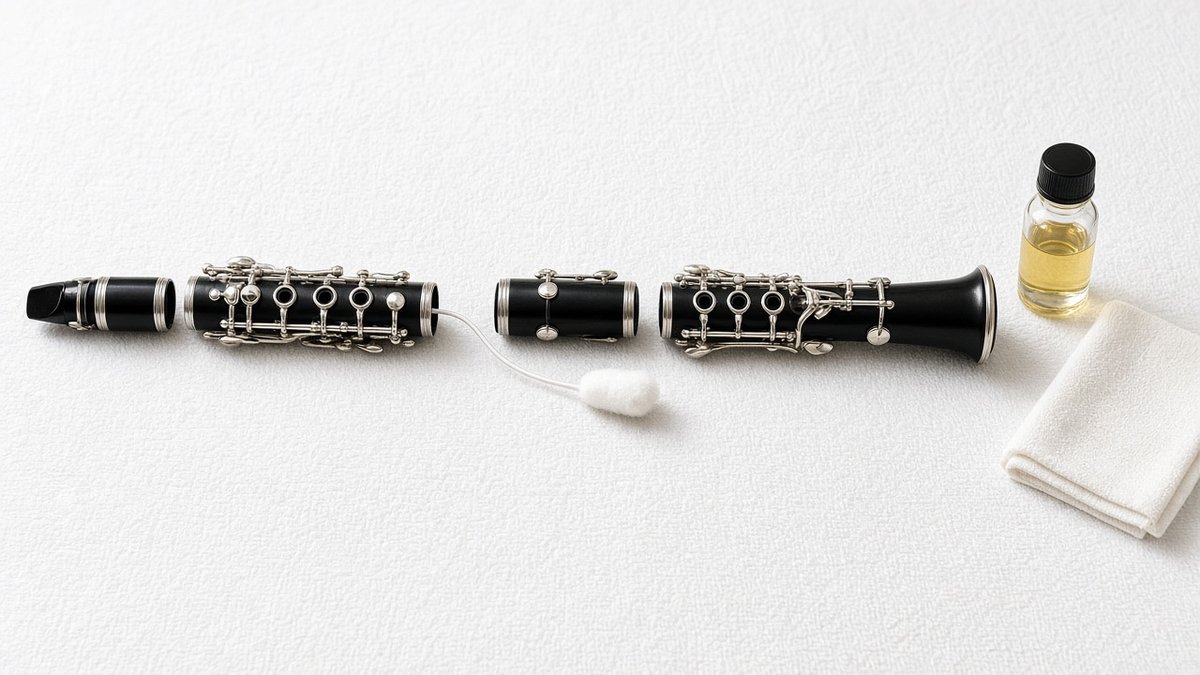
Knowing how to clean a clarinet properly is the single most important maintenance habit a player can develop. Learning how to clean a clarinet takes less than five minutes after each session, but skipping it regularly leads to pad damage, mold growth, cracked wood, and repair bills that dwarf the cost of a simple cleaning kit. This guide covers exactly what to do after every session, and what deeper maintenance looks like weekly and annually.
What You Need to Clean a Clarinet
Before getting into the steps, it helps to have the right tools. Everything fits inside your case and costs very little.
- Bore swab: a cloth with a weighted cord that pulls through each joint. The SuperSlick Hanky Swab is the most widely used option.
- Mouthpiece brush: a small soft brush for cleaning inside the mouthpiece.
- Cork grease: keeps joint corks lubricated. Vandoren or D’Addario are both reliable.
- Polishing cloth: a soft lint-free cloth for wiping down keys and the exterior.
- Reed case: stores reeds flat between sessions.
View Yamaha Clarinet Maintenance Kit on Amazon
View SuperSlick Hanky Swab on Amazon
How to Clean a Clarinet After Every Session
This routine should happen every single time you finish playing. Moisture left inside the bore promotes mold, pad deterioration, and in wood instruments, cracking. There are no shortcuts here.
Step 1: Remove the reed immediately
As soon as you finish playing, loosen the ligature and remove the reed without touching its tip. Place it in a reed case to dry flat. Never leave a reed on the mouthpiece. Doing so traps moisture between the reed and the mouthpiece table and shortens the reed’s life significantly.
Step 2: Swab the mouthpiece
Separate the mouthpiece from the barrel. Drop the swab cord through the mouthpiece from the tenon end and pull it through gently. Repeat once. If the swab catches, ease it back and try again rather than pulling hard, which can damage the interior.
Step 3: Swab each joint
Disassemble the clarinet completely: barrel, upper joint, lower joint, and bell. Drop the weighted end of the swab through each piece from the wider end and pull it through. Because the upper joint has keywork, be careful not to catch the swab on the keys. Two passes through each joint is enough for routine cleaning.
Step 4: Wipe the tenon corks
After swabbing, wipe each tenon joint with a dry cloth to remove any moisture. Moisture sitting on cork accelerates drying and cracking. Check that each cork feels smooth. If any joint feels tight or dry, apply a thin coat of cork grease before putting the instrument away.
Step 5: Wipe the keys
Use a polishing cloth to wipe down the keywork, removing finger oils and moisture. This prevents tarnishing on silver-plated keys and keeps the mechanism free of residue. Be gentle and avoid pushing the cloth under the pads.
Step 6: Reassemble and case
Place each section back in its designated slot in the case. Make sure nothing is resting on keys or pads, as pressure during storage causes keys to bend and pads to deform over time.
How to Clean a Clarinet Mouthpiece Weekly
Once a week, give the mouthpiece a more thorough clean. Rinse it under lukewarm water, then use a mouthpiece brush with a small amount of mild dish soap to scrub the inside. Rinse thoroughly and let it air dry completely before storing. Hot water can warp the mouthpiece material, so temperature matters here.
Never use alcohol, undiluted bleach, or abrasive materials on the mouthpiece. These damage the internal facing and table surface, which directly affects how the reed responds.
How to Clean a Clarinet’s Tone Holes
Over time, dust and debris accumulate inside the tone holes, causing intonation problems in the throat tone register. Cleaning the tone holes every few weeks prevents issues from building up.
Use a soft pipe cleaner or dedicated tone hole cleaner and run it gently through each hole. Don’t force anything into holes that feel tight, as this can scratch the interior of the tone hole and affect the seal. If you notice persistent intonation problems in specific notes despite careful cleaning, a repair technician can assess whether the holes need professional attention.
Bore Oil for Wood Clarinets
If you play a wooden clarinet, bore oil is an essential part of long-term maintenance. ABS and ebonite instruments don’t need it. Apply bore oil to the inside of the bore using a clean wool swab, let the instrument rest for a few minutes, then swab out the excess. During the first year of a new wood clarinet, apply bore oil every two to three weeks. After the first year, a few times annually is sufficient.
Use proper clarinet bore oil rather than substitutes. Cooking oils go rancid inside the bore, and lemon oil designed for guitars is not formulated for clarinet wood.
Annual Professional Servicing
Even with careful home maintenance, a clarinet benefits from a professional service once a year. A repair technician will replace worn pads, adjust key alignment, replace any damaged corks, check spring tension, and oil the mechanism. The cost is typically $50 to $100, which is much less than the cost of major repairs caused by years of deferred maintenance.
After summer, when instruments have often been stored for months, is a particularly good time for a service visit before the new school year begins. Pads that sat under pressure in a case all summer may need adjustment before the instrument plays as it should.
Common Cleaning Mistakes to Avoid
Never run water through the bore of the instrument. It damages pads in a single session and is nearly impossible to dry completely from inside. Similarly, never use paper towels as a bore swab. They leave fibres and can scratch the bore interior.
Avoid storing the instrument near heat sources, in direct sunlight, or in a car during temperature extremes. Wood clarinets in particular are vulnerable to rapid temperature changes, which cause cracking. Also, never store music books or other items inside the case resting on keys. Sustained pressure bends key cups out of alignment over time.
For full details on what cleaning supplies to buy, see our guide to the best clarinet cleaning kits.
FAQ
How often should I clean my clarinet?
Swab the bore after every single session. A more thorough clean including mouthpiece washing and key wiping should happen weekly. Professional servicing is recommended once per year.
Can I use rubbing alcohol to clean my clarinet?
On the keys, yes. A Q-tip lightly dampened with isopropyl alcohol cleans tarnish and residue effectively. Keep alcohol away from pads and corks entirely, as it causes them to dry out and deteriorate quickly. Never use alcohol inside the bore.
My clarinet has a musty smell. What should I do?
Musty odour typically indicates mold growth inside the bore, which happens when moisture is regularly left in the instrument after playing. Thorough swabbing after every session prevents this. If the odour is already established, a professional cleaning from a repair technician is the most reliable solution.
Charlotte Moore

Charlotte Moore is a Clarinetist by profession and has over time offered lessons on how to play the clarinet among other musical instruments. And while a majority of clarinet players are well versed with the process of settling with a good clarinet among other accompanying features. There is little information about clarinets. The reason why Charlotte prepared comprehensive experts touching on the various facets of the clarinet. The consolidated information will offer more insight on everything clarinets including the best stand to use, and the best plastic clarinet that you can invest in, among other information. Charlotte Moore is a devoted mother of two and a professional clarinet player.