
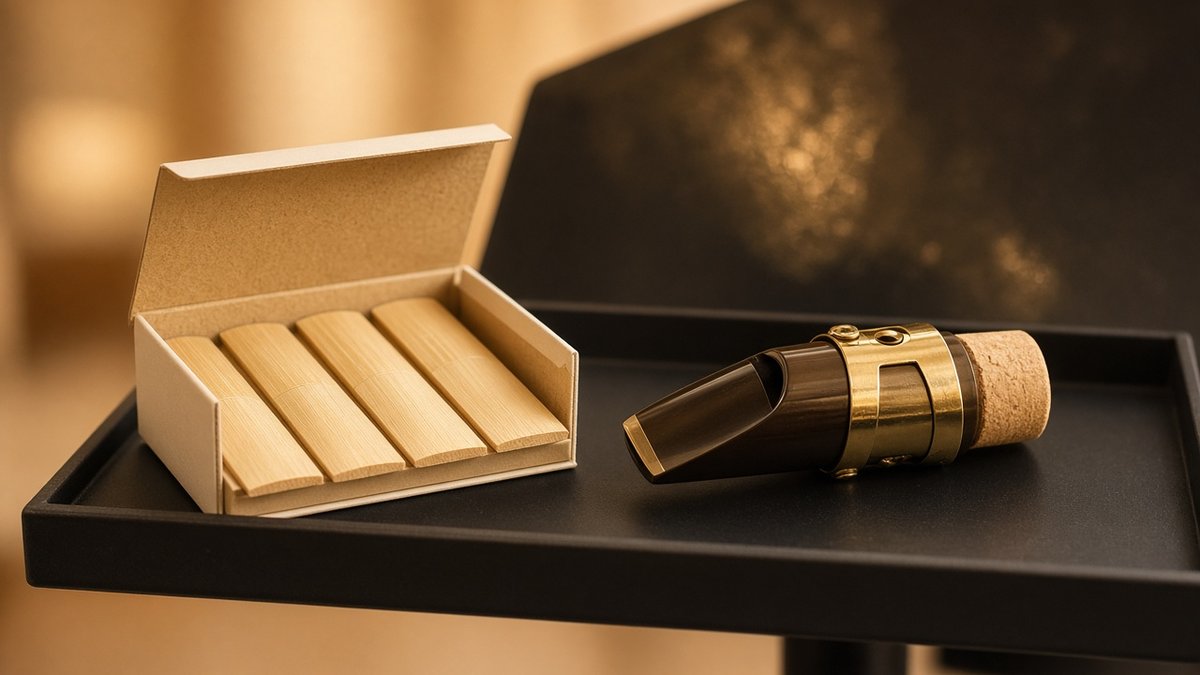
Choosing the best saxophone reeds for beginners matters more than most parents realise. A reed that is too hard makes a first sound almost impossible, and a reed that is too soft squeaks constantly. Either way, the student blames themselves and practice stalls. Student reeds are cut softer and more consistently than pro cane, which is exactly what early players need. Here are the options that actually help beginners get a tone.
Saxophone Reed Types Compared
| Type | Strength Range | Best For | Typical Price |
|---|---|---|---|
| Student cane (JUNO, Rico) | 1.5 to 2.5 | First year players | $15 to $25 / box |
| Traditional cane (Vandoren) | 2 to 3.5 | Year two and up | $25 to $35 / box |
| Filed / Java style | 2 to 3 | Jazz tone practice | $25 to $40 / box |
| Synthetic (Legere) | 2 to 3 | Consistency, travel | $25 to $35 each |
Vandoren JUNO: Built for Students
JUNO reeds are cut specifically for beginners. They respond at low air pressure, which means a young player can produce a sound without fighting the reed, and the tip is shaped to reduce the squeaks that kill early confidence.
- Easy response with modest air support
- Consistent cut across the box
- Priced for school music programmes
- Works well with stock student mouthpieces
- Not ideal once the embouchure strengthens
- Shorter lifespan than premium cane
Rico Royal / Orange Box: The School Default
Rico (now D’Addario) orange box reeds have been the school band standard for decades. They are soft enough for beginners, widely stocked, and cheap enough that buying a full box instead of singles actually makes sense.
- Very affordable per reed
- Soft cut suits first year players
- Easy to find in most music shops
- Inconsistent from reed to reed
- Wear out faster than Vandoren
Legere Signature Synthetic: No Soaking
Synthetic reeds solve the biggest beginner problem: forgetting to soak the reed, or soaking it wrong. A Legere plays immediately out of the case and lasts months rather than weeks, which offsets the higher upfront cost.
- No soaking required
- Stable response in any climate
- One reed lasts for months of practice
- Higher cost per reed
- Tone differs from cane, which teachers may flag later
What Strength Should a Beginner Buy?
Start at strength 2 for most alto saxophone beginners, or 1.5 if the student is young or has a soft embouchure. Strength 2.5 is usually too firm in the first term. Buy a full box rather than singles so you can discard the few that never play well, which is normal with cane.
Pair the reed with a decent student mouthpiece rather than fighting a worn stock piece. The JUNO J5 and similar student mouthpieces make reed choice far more forgiving. Our guide to how to assemble a saxophone covers fitting the reed correctly, and the best saxophone strap for kids roundup helps with comfort while they practise.
Recommended mouthpiece for reed testing:
Frequently Asked Questions
How long does a beginner saxophone reed last?
With daily practice, expect one to two weeks from a cane reed before the tip softens or chips. Rotate three or four reeds so each one lasts longer.
Alto or tenor reeds for a beginner?
Match the reed size to the instrument. Alto beginners use alto reeds; tenor beginners use tenor reeds at the same strength numbers, though tenor often feels slightly easier at strength 2.
Should beginners use synthetic reeds?
They are fine as a backup or for outdoor marching, but most teachers still prefer cane for tone development. One synthetic plus a box of cane is a sensible kit.