
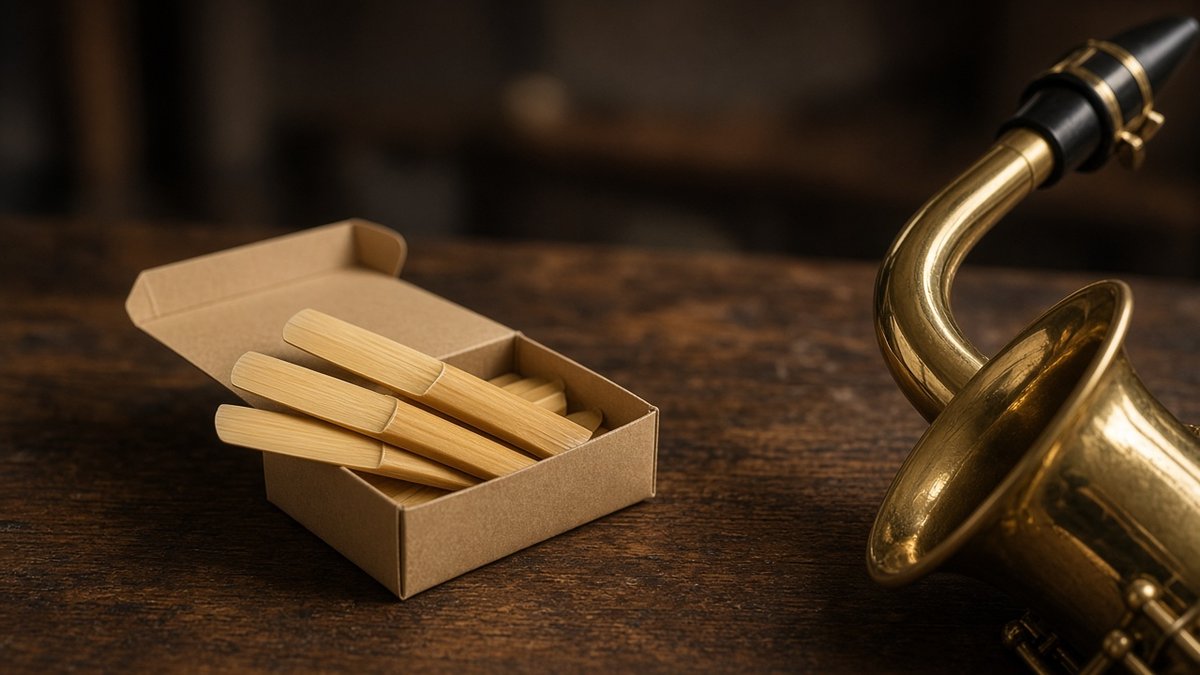
Choosing the best saxophone reeds has a bigger impact on your sound and ease of playing than almost any other accessory. The best saxophone reeds for you depend on your instrument, your experience level, and the kind of music you play, but a few brands and cuts have earned their reputation as reliable choices for players at every stage. This guide covers what actually works and how to choose the right strength.
How Saxophone Reeds Work
The reed is the thin piece of cane that vibrates against the mouthpiece to produce sound. Its strength, measured on a scale typically from 1 to 5, describes how stiff the cane is. A lower number means a softer, more flexible reed that’s easier to play, while a higher number means a stiffer reed that requires more developed embouchure and air support but offers more tonal control. Beginners should start soft and work up as their playing develops.
Best Saxophone Reeds: Quick Comparison
| Reed | Best For | Character |
|---|---|---|
| Vandoren Traditional | All-round, classical | Warm, flexible, responsive |
| Rico (by D’Addario) | Beginners, budget | Easy-playing, consistent |
| D’Addario Royal | Beginners to intermediate | Quick response, clear tone |
| Légère Signature | Durability, all conditions | Synthetic, no break-in |
Vandoren Traditional: Best Saxophone Reeds Overall
Vandoren Traditional reeds are the standard against which other reeds are measured. They produce a warm, rich, flexible tone that works across classical and jazz, and the cane quality is consistently high. Because they’re so widely used, they’re easy to find and a reliable benchmark for any player. For most saxophonists past the absolute beginner stage, Vandoren Traditional reeds in the right strength are an excellent choice that supports tonal development.
- Warm, rich, flexible tone
- Consistently high cane quality
- Works across classical and jazz
- Widely available everywhere
- Can be slightly resistant for absolute beginners
- Natural cane varies reed to reed
View Vandoren Traditional Reeds on Amazon
Rico by D’Addario: Best for Beginners
Rico reeds are the most common starting reed for beginning saxophonists, and for good reason. The thinner vamp cut makes them easy to play, which helps a new player produce a sound without struggling against a stiff reed. They’re consistent, affordable, and available everywhere. For a beginner in their first months, Rico reeds in strength 2 or 2.5 are the standard recommendation from teachers.
- Easy to play, ideal for beginners
- Affordable and widely available
- Consistent quality
- Clear, straightforward tone
- Less tonal depth than premium reeds
- Players outgrow them as they advance
D’Addario Royal: Best for the Beginner-to-Intermediate Transition
D’Addario Royal reeds bridge the gap between easy-playing beginner reeds and more demanding professional reeds. They offer quick response and a clear tone with a bit more body than basic Rico reeds, which makes them a natural step up as a player’s embouchure develops. They use a traditional filed cut that suits both classical and contemporary playing.
View D’Addario Royal Reeds on Amazon
Légère Signature: Best Synthetic Reeds
Légère Signature reeds are synthetic rather than cane, which gives them major practical advantages. They never need wetting, they don’t warp or wear out the way cane does, and they play consistently in any humidity or temperature. A single Légère reed lasts months and plays the same every time, which appeals to gigging players and anyone tired of the inconsistency of cane. They’re expensive per reed, but because one lasts so long, the cost over time is competitive. The tone is excellent, though some players still prefer the character of natural cane.
- No wetting or break-in needed
- Consistent in any conditions
- Lasts months instead of days
- Excellent, even tone
- Expensive per reed
- Some players prefer natural cane character
View Légère Signature Reeds on Amazon
What Reed Strength Should a Beginner Use?
Beginning saxophonists should start with a strength 2 or 2.5 reed. A softer reed is easier to play while the embouchure is still developing, which means less frustration and a quicker path to producing a clean sound. As the player’s embouchure strengthens over the first year, moving up to a 2.5 or 3 gives more tonal control and projection. Going too stiff too soon makes playing harder and can encourage biting, which is a habit that’s difficult to correct later.
How to Make Reeds Last Longer
Rotate between three or four reeds rather than playing the same one every session, which lets each dry fully and lasts far longer. Store reeds flat in a proper reed case to prevent warping. After playing, gently wipe the reed and let it dry before storing. With cane reeds, a little care dramatically extends how long each one stays playable.
FAQ
What are the best reeds for a beginner saxophone player?
Rico reeds in strength 2 or 2.5 are the standard recommendation for beginners because they’re easy to play and affordable. As the player develops, Vandoren Traditional reeds offer more tonal depth and become the natural next step.
What strength saxophone reed should I use?
Beginners should start with strength 2 or 2.5. As the embouchure develops over the first year, many players move up to 2.5 or 3 for more control and projection. Going too stiff too early makes playing harder and can cause bad habits.
Are synthetic saxophone reeds worth it?
For many players, yes. Synthetic reeds like the Légère Signature never need wetting, play consistently in any conditions, and last for months. They cost more per reed but can be more economical over time, and they eliminate the inconsistency of natural cane.
Charlotte Moore

Charlotte Moore is a Clarinetist by profession and has over time offered lessons on how to play the clarinet among other musical instruments. And while a majority of clarinet players are well versed with the process of settling with a good clarinet among other accompanying features. There is little information about clarinets. The reason why Charlotte prepared comprehensive experts touching on the various facets of the clarinet. The consolidated information will offer more insight on everything clarinets including the best stand to use, and the best plastic clarinet that you can invest in, among other information. Charlotte Moore is a devoted mother of two and a professional clarinet player.