
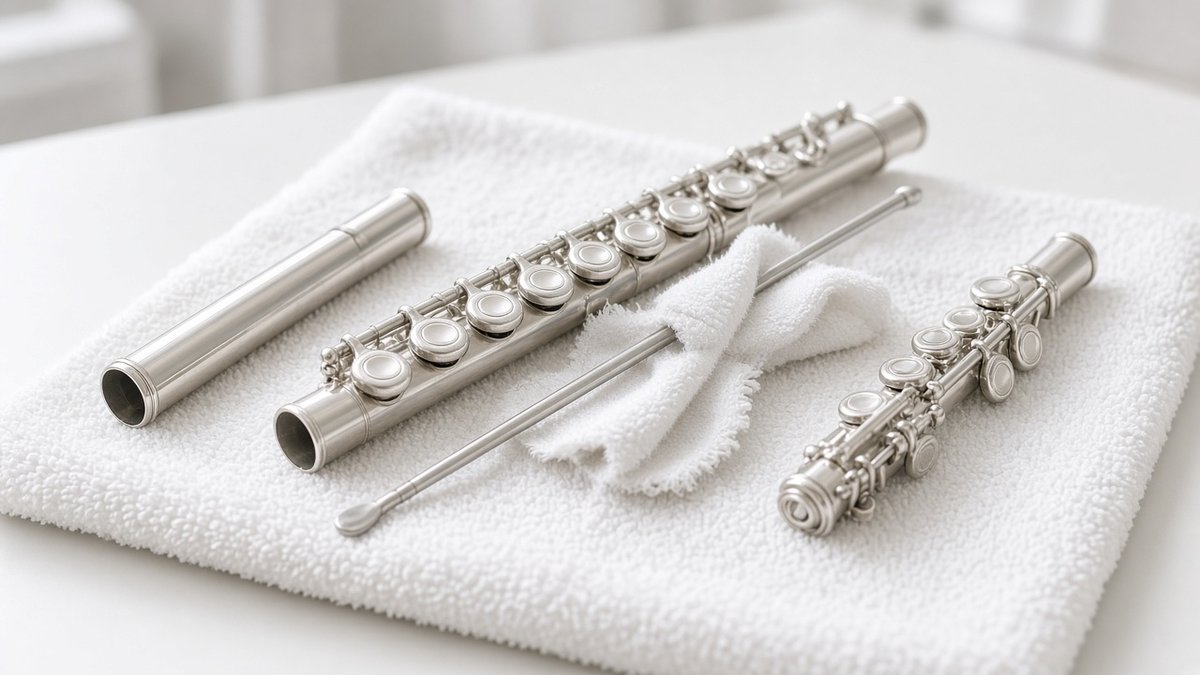
Knowing how to clean a flute properly is one of the most important habits a player can build, because moisture left inside the instrument damages pads, causes keys to stick, and tarnishes the silver. Learning how to clean a flute takes only a couple of minutes after each session, and doing it consistently extends the life of the pads and keeps the instrument playing well. This guide covers the full routine, from daily care to occasional deeper cleaning.
What You Need to Clean a Flute
The tools needed are simple and inexpensive. A cleaning rod, usually included with the flute, holds a cloth for swabbing the inside. A soft, lint-free cleaning cloth or gauze absorbs moisture from the bore. A separate polishing cloth wipes the exterior and keys. Pad cleaning paper removes moisture and stickiness from under the pads. All of these fit in the case, so there’s no excuse to skip the routine.
View Flute Cleaning Kit on Amazon
How to Clean a Flute After Every Session
This routine should happen every time you finish playing. Moisture left inside the flute is the main cause of pad deterioration and sticking keys, so consistency matters more than anything.
Step 1: Disassemble the flute
Separate the flute into its three sections: the headjoint, body, and footjoint. Always twist gently rather than forcing the joints, and grip the parts where there are no keys to avoid bending the mechanism.
Step 2: Swab the inside of each section
Thread the cleaning cloth through the eye of the cleaning rod, leaving a little cloth covering the tip so the rod’s metal end never touches the inside of the flute. Run the rod through the body and footjoint to absorb moisture. For the headjoint, swab gently without forcing the rod against the cork at the closed end.
Step 3: Wipe the exterior and keys
Use a polishing cloth to wipe down the body, keys, and headjoint, removing fingerprints and moisture. This prevents tarnish on silver and keeps the mechanism free of residue. Wipe gently around the keys and avoid pushing the cloth under the pads.
Step 4: Care for sticky pads
If any pad feels sticky or makes a smacking sound when the key lifts, place a piece of pad cleaning paper under the pad, press the key gently a few times, then draw the paper out. This absorbs the moisture causing the stickiness. Avoid using powder or other substances unless a technician recommends them.
Step 5: Store the flute properly
Place each section back in its fitted slot in the case, making sure nothing rests on the keys. Sustained pressure on the keys during storage bends them out of alignment over time. Close the case fully so the instrument is protected.
Weekly and Occasional Cleaning
Once a week, give the keys and mechanism a more thorough wipe-down to remove built-up dust and finger oils. A small, soft brush helps clear dust from around the keys and posts where the polishing cloth can’t reach. If the silver is tarnishing, a proper silver polishing cloth restores the shine, though it’s best to keep polish away from the pads and mechanism.
The headjoint cork should also be checked occasionally. Use the marking on your cleaning rod to confirm the cork is positioned correctly, since a cork that has shifted affects tuning. If it’s out of position or the headjoint whistles or plays out of tune, a technician can replace or reposition it.
What to Avoid When Cleaning a Flute
Never run water through the flute or submerge any part of it, as this damages the pads. Don’t use paper towels or tissues as a swab, since they leave fibres and can scratch the bore. Avoid letting the metal tip of the cleaning rod touch the inside of the instrument, which can scratch it, so always cover the tip with cloth. Don’t store the flute near heat or in a hot car, and never leave it assembled and lying around where it can be knocked.
Annual Professional Servicing
Even with careful daily cleaning, a flute benefits from a professional service once a year. A technician will replace worn pads, adjust key alignment and spring tension, check the headjoint cork, and clean areas you can’t reach. The cost is modest compared to the repairs that result from years of neglect, and it keeps the instrument playing at its best.
For a full guide to the tools worth buying, see our article on the best flute cleaning kit.
FAQ
How often should I clean my flute?
Swab the inside after every single session to remove moisture, and wipe the exterior and keys too. A more thorough clean of the keys and mechanism weekly, plus an annual professional service, keeps the flute in top condition.
Can I use water to clean my flute?
No. Never run water through the flute or submerge it, as this damages the pads, which are not designed to get wet. Clean the inside with a dry cleaning cloth on the rod, and wipe the exterior with a dry polishing cloth.
Why are my flute keys sticky?
Sticky keys are usually caused by moisture under the pads. Place pad cleaning paper under the sticky pad, press the key gently a few times to absorb the moisture, then remove the paper. If stickiness persists, the pad may be worn and a technician should check it.
Charlotte Moore

Charlotte Moore is a Clarinetist by profession and has over time offered lessons on how to play the clarinet among other musical instruments. And while a majority of clarinet players are well versed with the process of settling with a good clarinet among other accompanying features. There is little information about clarinets. The reason why Charlotte prepared comprehensive experts touching on the various facets of the clarinet. The consolidated information will offer more insight on everything clarinets including the best stand to use, and the best plastic clarinet that you can invest in, among other information. Charlotte Moore is a devoted mother of two and a professional clarinet player.