
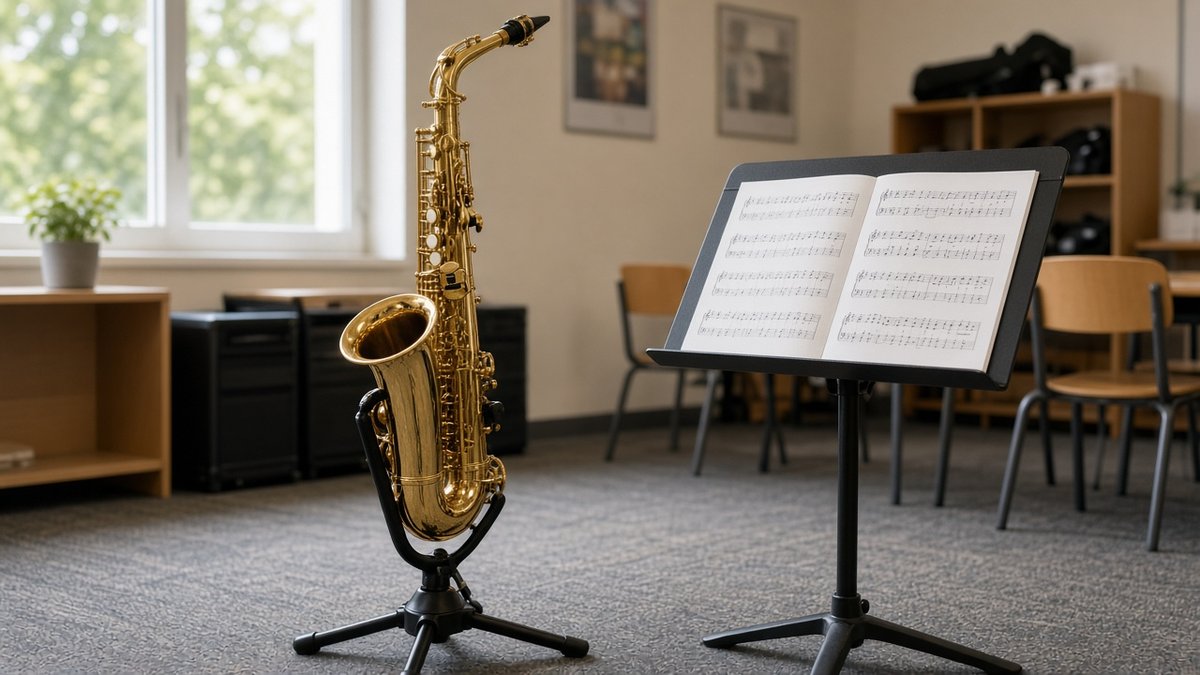
The Yamaha YAS-280 review question comes up constantly among parents and students choosing a first serious saxophone. The Yamaha YAS-280 is widely considered the gold standard for student alto saxophones, used in school band programs everywhere and recommended by teachers who have seen hundreds of student instruments. This review explains exactly what makes it so consistently recommended and whether it’s the right choice for you.
Yamaha YAS-280 Review: Who Is This Instrument For?
The YAS-280 is Yamaha’s standard student alto saxophone, designed for beginners from school age upward. It replaced the highly regarded YAS-275 and improved on it with a more stable neck receiver and a better low B-C# connection. It suits beginning band students, adult learners starting fresh, and anyone who wants a reliable, high-quality instrument without paying intermediate or professional prices. Because it’s so widely used, teachers and repair technicians understand it thoroughly, which makes support straightforward.
Build and Construction
The YAS-280 has a gold lacquer finish over a brass body, with a high F# key and front F auxiliary key. The redesigned neck receiver features a durable screw that promotes quick response and increases the longevity of the mechanism. The improved low B-C# connection ensures the consistent closing of the low C# key, which promotes a clear response from notes in the low range, an area where cheaper instruments often struggle.
All Yamaha saxophones feature an adjustable thumb rest, which lets players position the rest for their hand size and helps younger players find a natural, comfortable hand position. The instrument is relatively lightweight and ergonomically shaped, reducing fatigue during longer practice sessions. Because Yamaha’s manufacturing quality control is among the best in the industry, every YAS-280 plays with the same dependable character, so buying one without playing it first carries very little risk.
Sound
The YAS-280 produces a clear, even, warm tone that genuinely sounds like the saxophone you hear on recordings. The intonation is excellent across the full range, which is the single most important quality for a developing player, because learning to play in tune is much easier on an instrument that’s accurate to begin with. The low register responds cleanly thanks to the improved key connections, and the overall sound is full and rich rather than thin or harsh.
For a student instrument, the tonal quality is remarkable. Many players keep their YAS-280 as a backup even after moving up to professional instruments, which speaks to how satisfying it is to play.
Yamaha YAS-280 Review: Pros and Cons
- Excellent intonation, the best among student saxophones
- Warm, full, recording-quality tone
- Lightweight and ergonomic for younger players
- Adjustable thumb rest for different hand sizes
- Outstanding build quality and consistency
- Strong resale value
- More expensive than budget alternatives
- Significant investment if a student might not continue
View Yamaha YAS-280 Price on Amazon
Yamaha YAS-280 vs Jean Paul AS-400
| Yamaha YAS-280 | Jean Paul AS-400 | |
|---|---|---|
| Body | Brass, gold lacquer | Yellow brass, gold lacquer |
| Intonation | Excellent | Very good |
| Key action | Very smooth | Smooth, fluid |
| Resale value | Strong | Limited |
| Price | ~$1,100 | ~$450 |
The Jean Paul AS-400 is the value champion, offering performance that comes genuinely close to the Yamaha at less than half the price. However, the YAS-280 has the edge in intonation precision, key action smoothness, and resale value. For families where budget is the priority, the Jean Paul is a smart buy. For those who want the safest long-term investment and can afford it, the Yamaha is the instrument that holds its value and keeps performing for years.
What to Upgrade First
Unlike many student instruments, the YAS-280’s included 4C mouthpiece is genuinely good, so there’s no urgent need to replace it. As a player advances, many move to a mouthpiece like the Yamaha 5C or a Selmer model for a different tonal character, but that’s a refinement rather than a necessity. The more immediate accessory needs are a comfortable neck strap and a supply of quality reeds in the right strength.
If you’re still deciding between saxophone and clarinet, our clarinet vs saxophone comparison breaks down the differences.
Is the Yamaha YAS-280 Worth the Price?
Yes, for committed players. The YAS-280 costs significantly more than the Jean Paul AS-400, but that premium buys the best intonation in its class, superb build quality, Yamaha’s reliability, and strong resale value. For a student who will be playing seriously for years, that investment pays off. For someone genuinely unsure whether they’ll stick with the instrument, the Jean Paul AS-400 is the more sensible starting point, with the option to upgrade to a Yamaha later.
FAQ
Is the Yamaha YAS-280 good for adults?
Yes. The YAS-280 is excellent for adult beginners as well as students. The adjustable thumb rest accommodates adult hands, and the instrument’s quality means adult learners won’t feel limited by it. It’s a genuine pleasure to play at any age.
How long will the Yamaha YAS-280 last?
With proper care and regular servicing, the YAS-280 lasts many years. Many players keep theirs as a backup instrument even after upgrading to professional saxophones, and school programs run them through multiple students over years of use.
What’s the difference between the YAS-280 and YAS-26?
The YAS-26 is the North American model designation and the YAS-280 is the international version of essentially the same instrument. Both are excellent student saxophones with very similar specifications. Availability and pricing vary by region, but the playing experience is comparable.
Charlotte Moore

Charlotte Moore is a Clarinetist by profession and has over time offered lessons on how to play the clarinet among other musical instruments. And while a majority of clarinet players are well versed with the process of settling with a good clarinet among other accompanying features. There is little information about clarinets. The reason why Charlotte prepared comprehensive experts touching on the various facets of the clarinet. The consolidated information will offer more insight on everything clarinets including the best stand to use, and the best plastic clarinet that you can invest in, among other information. Charlotte Moore is a devoted mother of two and a professional clarinet player.