
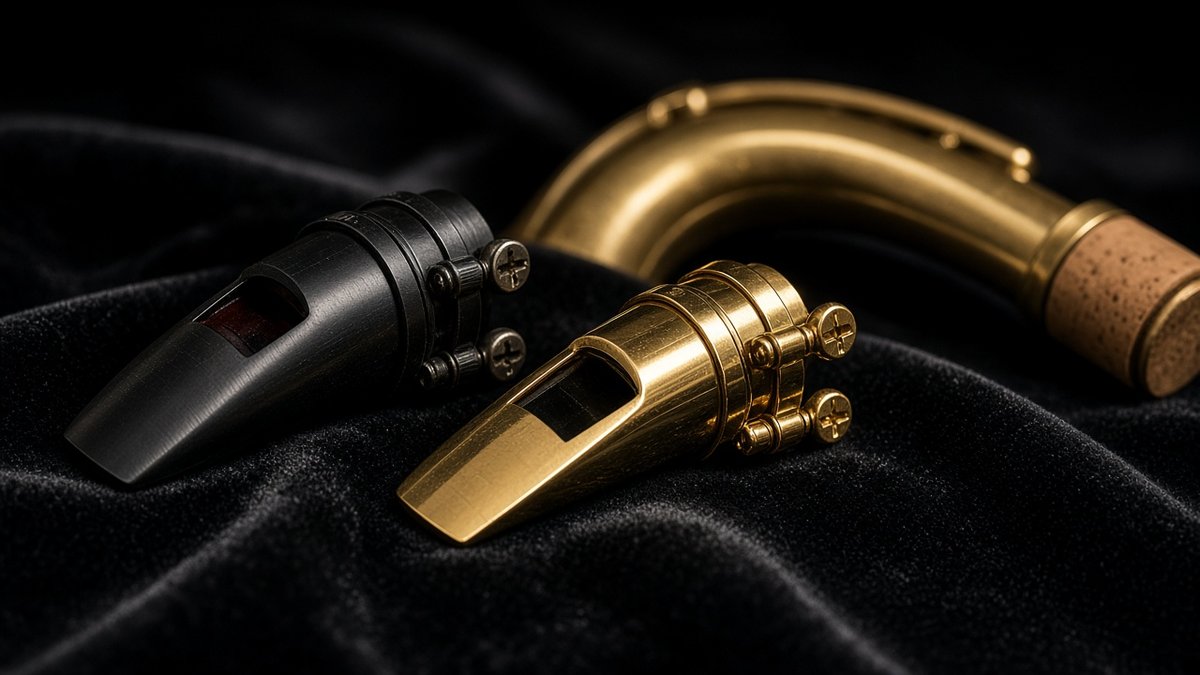
Upgrading to the best saxophone mouthpiece for your playing is one of the most cost-effective ways to improve your tone, often making a bigger difference than a new instrument. The best saxophone mouthpiece depends on whether you play alto or tenor, your experience level, and the style of music you favour, but a handful of mouthpieces have earned lasting reputations across all of these. This guide covers the options that genuinely work.
Why the Mouthpiece Matters So Much
The mouthpiece shapes the sound before it even reaches the body of the saxophone. Its tip opening, chamber size, and material all affect how the reed responds, how much resistance you feel, and the character of your tone. The basic mouthpieces included with student saxophones are functional but limited, so upgrading is often the single most impactful improvement a developing player can make. A better mouthpiece can transform a stuffy, thin sound into something full and expressive.
Best Saxophone Mouthpiece: Quick Comparison
| Mouthpiece | Best For | Style |
|---|---|---|
| Yamaha 4C | Beginners, all-round | Classical, concert band |
| Selmer S80 C* | Intermediate, classical | Warm, focused classical |
| Meyer 5M | Jazz, intermediate | Bright, expressive jazz |
| Vandoren V16 | Jazz, advancing players | Full, powerful jazz |
Yamaha 4C: Best Saxophone Mouthpiece for Beginners
The Yamaha 4C is the standard upgrade and starting mouthpiece for student saxophonists, and it’s genuinely good rather than just adequate. It has a medium tip opening that’s forgiving for developing embouchures, produces a clear, even tone, and works well across concert band and classical playing. It comes included with Yamaha student saxophones, and for players whose instrument came with a lesser mouthpiece, switching to a 4C is an inexpensive and immediate improvement. For most beginners, it’s all the mouthpiece they need for the first year or two.
- Forgiving medium tip opening for beginners
- Clear, even, reliable tone
- Inexpensive
- Excellent for concert band and classical
- Not ideal for bright jazz tone
- Players advance beyond it eventually
View Yamaha 4C Mouthpiece on Amazon
Selmer S80 C*: Best for Classical Players
The Selmer S80 C* (pronounced “C-star”) is a classic choice for intermediate and advancing classical saxophonists. Its square chamber design produces a warm, focused, centered tone that’s ideal for classical solo and ensemble playing. It’s the mouthpiece many serious students move to after outgrowing the Yamaha 4C, and it remains a standard in conservatory and orchestral settings. For a player developing a classical sound, the S80 C* is a benchmark upgrade.
- Warm, focused, centered classical tone
- Standard in conservatory and orchestral playing
- Natural step up from the Yamaha 4C
- Excellent build quality
- Not suited to bright jazz playing
- More expensive than beginner mouthpieces
View Selmer S80 C* Mouthpiece on Amazon
Meyer 5M: Best for Jazz
The Meyer 5M is one of the most popular jazz alto saxophone mouthpieces ever made. Its medium chamber and medium tip opening produce a bright, expressive, flexible tone that cuts through a band while remaining controllable for intermediate players. Countless jazz saxophonists have used Meyer mouthpieces, and the 5M is the sweet spot for players developing a jazz sound without jumping to a very open, demanding tip. For a student moving from classical into jazz, the Meyer 5M is the natural choice.
View Meyer 5M Mouthpiece on Amazon
Vandoren V16: Best for Advancing Jazz Players
The Vandoren V16 is a step up for jazz players who want a fuller, more powerful sound with more projection. It has a larger chamber that produces a rich, warm jazz tone with plenty of body, and it’s a favourite among players who want a more expressive, commanding voice. It demands a more developed embouchure than the Meyer 5M, so it’s best suited to players who have already established their jazz fundamentals.
View Vandoren V16 Mouthpiece on Amazon
How to Choose the Right Mouthpiece
Start with what your playing needs. If you’re a beginner, the Yamaha 4C is all you need and an easy, affordable upgrade over a basic stock mouthpiece. If you’re developing a classical sound, the Selmer S80 C* is the benchmark. If you’re moving into jazz, the Meyer 5M is the natural first jazz mouthpiece, with the Vandoren V16 as a step up for more power. Match the mouthpiece to your reed strength too, since a more open tip generally pairs with a softer reed.
FAQ
What is the best saxophone mouthpiece for beginners?
The Yamaha 4C is the best beginner saxophone mouthpiece. It has a forgiving medium tip opening, produces a clear tone, and is inexpensive. It’s an immediate improvement over the basic mouthpieces included with many budget saxophones.
Does upgrading the mouthpiece really improve your sound?
Yes, significantly. The mouthpiece shapes the tone before the sound reaches the body of the saxophone, so a better mouthpiece can transform a stuffy or thin sound into something full and expressive. It’s often the single most cost-effective upgrade a player can make.
What’s the difference between a classical and jazz saxophone mouthpiece?
Classical mouthpieces like the Selmer S80 C* have smaller tip openings and chambers that produce a warm, focused, centered tone. Jazz mouthpieces like the Meyer 5M have larger or differently shaped chambers that produce a brighter, more flexible, projecting sound suited to jazz playing.
Charlotte Moore

Charlotte Moore is a Clarinetist by profession and has over time offered lessons on how to play the clarinet among other musical instruments. And while a majority of clarinet players are well versed with the process of settling with a good clarinet among other accompanying features. There is little information about clarinets. The reason why Charlotte prepared comprehensive experts touching on the various facets of the clarinet. The consolidated information will offer more insight on everything clarinets including the best stand to use, and the best plastic clarinet that you can invest in, among other information. Charlotte Moore is a devoted mother of two and a professional clarinet player.